Saturday, December 15, 2012

Advent Series (3): Joy to the World, Luke 2:10-11

Joy to the World
Luke 2:10-11
Advent Series (3)


By Pastor Brian
Fort Bend Community Church
2012.12.16 Christmas Joint Service


Introduction

1. Merry Christmas.

I love Christmas music and I love Christmas carols. Someone said that the Christmas carols are rich in theology. This morning I would like to play a game with you. First, Rule #1: no cheating on you smart phone with the internet. Find "JOY" in any of the Christmas carols. And you will get a price if you are right.

Joy to the World

Joy to the world, the Lord is come;
Let earth receive her King;
Let every heart prepare Him room,
And heaven and nature sing,
And heaven, and heaven and nature sing.


Angels We Have Heard on High

Angels we have heard on high
Sweetly singing o'er the plains,
And the mountains in reply
Echoing their joyous strains.
Gloria, in excelsis Deo!

Break forth, O beauteous heavenly light

Break forth, O beauteous heavenly light,
And usher in the morning;
O shepherds, shrink not with afright,
But hear the angel's warning.
This Child, now weak in infancy,
Our confidence and joy shall be,
The power of Satan breaking,
Our peace eternal making.

From Heaven Above To Earth I Come

From heaven above to earth I come
To bear good news to every home;

Glad tidings of great joy I bring,
Whereof I now will say and sing.


God rest you merry, gentlemen

God rest you merry, gentlemen,
Let nothing you dismay.
For Jesus Christ our Savior,
Was born on Christmas Day;
To save us all from Satan's power,
When we were gone astray.
O tidings of comfort and joy,
For Jesus Christ our Savior
Was born on Christmas day.


Hark! the herald angels sing
 Hark! the herald angels sing
Glory to the new-born King!
Peace on earth and mercy mild,
God and sinners reconciled!
Joyful, all ye nations, rise,
Join the triumph of the skies;
With th' angelic host proclaim
Christ is born in Bethlehem!
Hark! the herald angels sing
Glory to the new-born King!


O come, all ye faithful,

O come, all ye faithful,
Joyful and triumphant,
O come ye, O come ye to Bethlehem;
Come and behold him,
Born the King of angels;
O come, let us adore him,
O Come, let us adore him, Christ the Lord.


O come, O come, Emmanuel,

O come, O come, Emmanuel,
And ransom captive Israel,
That mourns in lonely exile here
Until the Son of God appear.
Rejoice! Rejoice! Emmanuel
Shall come to thee, O Israel.

What Child is This
Raise, raise a song on high,
The virgin sings her lullaby.
Joy, joy for Christ is born,
The Babe, the Son of Mary.

O Holy Night
Truly He taught us to love one another,
His law is love and His gospel is peace.
Chains he shall break, for the slave is our brother.
And in his name all oppression shall cease.
Sweet hymns of joy in grateful chorus raise we,
With all our hearts we praise His holy name.
Christ is the Lord! Then ever, ever praise we,
His power and glory ever more proclaim!

Christmas carols which do not have the word, joy, in it include:
  • Away in the Manger
  • The First Noel
  • O Little Town of Bethlehem
  • Silent Night
  • Thou Didst Leave Thy Throne
  • What Child is this
  • Once in Royal David's City
  • We Three Kings of Orient
  • It Came Upon the Midnight Clear
  • We Wish You a Merry Christmas

2. Joy is a key word in the biblical accounts of the birth of Christ. Joy is at the center of the announcement of the birth to the shepherds and to the world and to us. The shepherds represent common people like you and me.

In Luke 2:10-11 "And the angel said to the shepherds, "Fear not, for behold, I bring you good news of great joy that will be for all the people. For unto you is born this day in the city of David a Savior, who is Christ the Lord."


I. The good news is the Christmas joy, Luke 2:10

1. The Angel brings the Good News--the Greek word is "evangelize"--proclaim the good news. That is right. Evangelism means to bring Good News to people. Today if you share the Good News of Jesus Christ, you are proclaiming the good news, just like the angel did 2,000 years ago.

The good news the angel proclaims is a message from God. It is not an ordinary message. It was announced by an angel, a supernatural being. It is a message from the divine, a message that the people of Israel has been waiting for 2,000 years. Finally the Messiah is here, bringing the good news of great joy.

2. This great news of great joy. Great Joy. Not just joy, but exceeding joy, an intense joy, an overwhelming joy, a joy that we don't see very often today.

Today we have one simple task. We will learn what is joy. What does this joy look like? What does this joy feel like? And what do we do when we have joy? Okay?

3. What is joy? The Greek word in Luke 2:10 is chara: It means joy, cheer, gladness, or celebration. It is a very important word in the New Testament. It appears 59 times.

Joy is the result of the presence of the Holy Spirit among human beings. The Holy Spirit generates joy as a witness of His presence in our life. Gal. 5:22 says that joy is the second part of the fruit of the Spirit. Love, JOY, peace... Rom. 14:17 says that the kingdom of God is a matter of joy in the Holy Spirit together with righteousness and peace. Being filled with joy is a sign of being filled by the Spirit (Acts 13:52; Luke 10:21). Hence joy to the world is a witness of the activity of God. When God is at work, we have joy from the Spirit.

Therefore if the presence of the Holy Spirit working among you, joy is the natural result. You will be joyful. It does not matter whether you have a good job, or whether you are married, or whether you have money. If the Spirit is working in your life, joy is the sign. This joy is given by the Holy Spirit deep in our soul.

The angel said, "I bring you good news of great joy." This good news is the work of God. Mary was conceived by the Holy Spirit. The Baby Boy is the fulfillment of the promise of God. The savior is born to save us from sins. That is why this is the good news of great joy. God is on the move. The Holy Spirit is presence and we have joy.

4. But there is a catch. Listen carefully. It is a good news of great joy, only if you receive it or participate in the work of God. In the NT usage, "joy" (chara) is often used together with the word, "receive."

Mark 4:16 and 1 Thess. 1:6  We receives the Word of God with joy of the Holy Spirit.
We receive salvation with joy (Luke 15:7, 10; John 3:29; 1 Thess. 3:9; 7:13; Phil 1:4; 2:2; 4:1)
People receive the vision or revelation from God with great joy (Luke 2:10; 1 John 1:4).
We receive with the work of God with joy (Phil 1:4; Col. 1:11; Luke 1:14).
Matt. 2:10 In the Christmas story, the magi saw the star, they rejoiced exceedingly with great joy.

When God is working among you, you need to embrace to, to receive it. Then the Spirit-induced joy will be given to you as a gift.

5. For examples, when this good news of great joy was brought to King Herod, he was not happy. There was no joy, because he did not embrace it nor did he receive it. On the other hand, when the shepherds heard the good news that the Savior was born, they went to look for the baby in the manger. And they rejoiced and they praised God all over the town of Bethlehem. When Simeon received the baby Jesus in his arms, he rejoiced and was glad. "Now I am ready to die."

The joy is a gift from the Holy Spirit, but you have to receive it, embrace it, and be part of it.

6. This afternoon, we have 34 people who will be baptized. It is a joyful occasion. The joy of salvation is yours when you receive it by faith. The Holy Spirit will give it to you deep in your soul this joy of the Lord.

7. Now let us take a closer look to see what this joy looks like.

First, this joy is not like most of us think as an involuntary and internal "emotion." No, joy is not just a happy thought. Joy is not just an emotion high or ecstasy. It is an comprehensive, value-centered, Christian characteristic or Christian virtue. Just like gentleness, friendliness, generosity, self-sacrifice, the joy of the Lord even in the midst of suffering is part of Christian's Good and Beautiful Life. Whoever has the Christian virtue also has this constant joy. It is what Christmas life is all about.

Second, the Joy from the Spirit runs deeper than 'physical pleasure'. When you have a good meal, play a good game, enjoy a good movie, that is called 'pleasure.' But joy is deeper than that feeling of physical pleasure. The physical pleasure goes only body-deep, only physical. After a good meal, you need another good meal pretty soon. The pleasure is not deep. It only fulfills your body. But not joy. Joy is much deeper. It comes from your soul in response to God's goodness.

I like the children's song, "J-O-Y." The theology is so true.

I've got joy down in my heart
Deep, deep down in my heart
J-O-Y down in my heart
Deep deep down in my heart
Jesus gives it to me
And nothing can destroy it, destroy it, destroy it!
I've got joy down in my heart
Deep, deep down in my heart


Thirdly, this joy is more enduring than mere 'fun'. We always want to have fun. Fun is easy going; fun is doing something you like. Fun-loving is a personality trait that we love to have. Fun is "hakuna matata" in Lion King. That means "don't worry. Be happy" in Swahili language.

But fun comes and goes. Very quickly Simba runs into troubles. He has to face his evil uncle, Scar. Fun won't last. But joy is enduring. It lasts for a lifetime. It won't fade.

Joy is deeper than pleasure, more enduring than fun. Lastly, joy is also more intense and thrilling than just 'happiness'. Happiness depends on circumstances, on outward conditions. When I get an A for my class, I am happy. When I win a basketball game, I am happy. When I got a good seat today, I am happy. It depends on circumstances. But the great joy is much more intense and thrilling, especially in a spiritual context. Joy runs deep into the core of us, and radiates throughout. It shows up in everything that we do.

It enables a person to endure joyfully the suffering and trials (1 Thess. 1:6). Last Friday, 12 girls, 8 boys, and 6 adults were shot to dead in Newtown, Connecticut, by a 20-year old. The killing doesn't make sense. Those kids are so young and they have their full life ahead of them. The nation is in shock and in grief.

Just like the massacre in Bethlehem when Herod killed all the innocent children under 2 years old. Last Sunday, we talked about Rachel weeping--mothers grieving for the lost of their children. It is as bad as it gets in this life. We grieve with them and mourn for their loss. But joy, the Holy Spirit induced joy, is deeper and more enduring and more intense than happiness. It will overcome even in times of grief and suffering, because God is still at work. The Holy Spirit still walks alongside with us, comforting and praying for us with words too deep for words.

8. Okay, Pastor Brian, how does this joy feel like? If I have a nice Christmas gift, I am happy. I know that feeling. What does this joy of the Spirit feel like? The Bible does not say much about it only some hints. And drawing from my own experience, joy feels very much like happiness, but deeper.

1) Joy serves as a backdrop of everything that I do. There are times when I still feel sad and down. But underneath the sadness, there is joy. Just like underneath the dark cloud, there is always the sun. I know that God is still at work. I know that the Spirit is in me guiding and empowering. Joy is almost like the color of this room. No matter what you do in this room, the color is till the same. Before I was 50 years old, I had this seas of anxiety from my upbringing that lived underneath everything I did. When I turned 50, I had a turnaround experience. I begin to see the work of God in me and around me. I begin to feel the Spirit-induced joy, replacing that seas of anxiety. That is the joy I believe from the fruit of the Spirit. I feel joyful even in the midst of trials and difficulties. The joy of Lord is there. I can feel it everyday.

2) In my experience, this joy is easily spike up when I see the work of God in me and around me. For examples, when God speaks through the Bible and to me, I feel the intense joy like a hot spring bubbling up to the surface. I want to sing, I want to dance, and and I want to shout. When I feel God's presence in a worship service, my joy is like a 747 jumbo jet taking off from the runway soaring into the sky. I would tear up and feel ecstatic. The joy is made full like Paul said many times when he saw the work of God or experienced the presence of God.

I don't know whether you have this experience of not. When you see your children or your disciples or the people you led to Christ grow in the Lord, you see that God is at work in their life, your joy spikes up to nth degree. You are happy; you are more than happy, you rejoice. And that joy is deep, is enduring, and is intense. It fills up your soul.

This afternoon I am going to baptize a brother. He came to me and said, "Pastor Brian, can you baptize me?" I said, "Of course, my pleasure." He said, "Please hold me down in the water as long as you can. I want to remember that feeling. It is a special day in my life." I said, "Okay. Will do." I still remember the first time I met him. I went to his home with Lily to share the Gospel with him. He was polite but stubborn. He is a biology scientist. There are just too many questions about evolution, about the existence of God, about the Bible and about everything. It took him a long time. But he begins to experience God. God is at work in his life. I see him changed and grows. I tell you that the joy of witnessing the work of the Spirit in his life is tremendously fulfilling, enduring, and abiding. I am very happy.

3) How does this joy actually feel like when I am in pain? In my experience and according to the Bible, in the midst of suffering the joy induced by the Spirit is still there.

I remember when I experienced the death of my mother at the beginning of this year. I was very sad to see her suffered. And death is horrible. I still miss her. There were tears. But amazingly, the Spirit comforted me and gives me joy--it is an inner conviction that all is well; all is calm; all is perfect in God's timing. He knows what is the best for me. Therefore I look forward to Jesus' returning in all His glory and with all the saints. For there will be no more death, no more tears, and no more pains.

This is what the Christmas joy is all about. The angel said, "I bring you the good news of great joy that is for all the people. For unto you is born this day in the city of David a Savior, who is Christ the Lord." (Luke 2:10-11) God is at work. He has entered into the our world to save us from sins. For you and for all the people, the Savior is born, who is Christ the Lord. There is no bigger event than this in the history of the world. God is with us, Emmanuel. For those who receive Him, it is the good news of great joy, exceeding joy, intense joy. It is the greatest work of God of great joy.

9. Application: Today you may feel sad, you may be unhappy, may be you are dealing with a crisis, may be you are dealing with tremendous loss. Remember the message from the angel. "I bring you good news of great joy. The savior is born today. He is here for you and for all the people." Remember that God is working among men. Let this Christmas joy be with you. Open your heart and receive the joy of the Lord to be your strength. Go ahead and smile. Go ahead and rejoice even in difficult time. J-O-Y down in my heart. Deep deep down in my heart. Jesus gives it to me. Nothing can destroy it.

10. Why are Christians not joyful today? One of the many reasons is that we are so preoccupy with happiness or the pursuit of happiness. We work too hard for happiness, a bigger house, a financially secured future, a successful career, and a happy family. We forget that real joy can only come from God. It is the work of the Spirit not ours. When we receive His presence with open hands, He will produce in us this unspeakable joy, lasting joy, and enduring joy.


II. Receive the good news with great joy

1. We have lighted the first two of the advent candles to celebrate the advent of Christ. To remember His first advent two thousand years ago and to look forward to His second advent when He comes again in all his glory.


1).      The promise of the Savior—the first candle of waiting
2).      The hope He brings—the second candle of hope. The color of these two candles are purple, the royal color.
3).      The third candle is JOY. The color is pink. It means joy. See that I wear pink today. The color of joy. When we see the flame of the candle of joy, open your heart to His presence. God has entered into our world. Welcome Him into your life. The Savior is born in the City of David who is Christ the Lord. Receive the Savior into your heart as your Christ and Lord. Be a part of the Christmas story. Receive the good news with great joy. Then the Joy of Christmas generated by the Spirit is yours forever.

2. The church which represents the work of God in the world must learn to be more joyful. The church which is responsible to proclaim the Good News to all the people must be filled with this Spirit-induced joy.

If you walk into a church where there is no joy, it is very doubtful that it is a Spirit-filled church. When we see this candle of joy, remember that the Savior is born. Let us rejoice and be glad.

Church, let us rejoice and be glad. FBCC, let us receive the joy of the Lord with gladness. Be a joyful church.


III. The intense joy of Christmas must be expressed

Joy is the essential response in our relationship with God, so much so that it cannot be contained within, it must be expressed.When you are full of joy, what do you do? Do you sit back and hold it within yourself? No, you can't. The joy of the Lord must be expressed. It flows from your soul to your face, to your body. You smile. You move.


1.  First, you Praise God. We did. Luke 2:10 as in the shepherds. Praising God is to express this joy.

2.  Second, you tell. We should. Just as the shepherds. They can't help it. They are so full of joy that they have to tell people about it. That night, the shepherds told everybody in the little town of Bethlehem of 300 to 1,000 residents. We too must tell people about the good news. The savior is born for all the people. Tell your neighbors, tell your colleagues, tell your family members. This is so good, so exciting. We must tell. In about a 2 weeks, we will enter into 2013, the year of evangelism at FBCC. We want to sow more seeds. We want tell His story. We want to share this joy. Let us tell.

3.  You dance which we will do next. Dance is part of our natural response to joy. Don't you agree? Watch the Texans game this afternoon. When the good guys score a touchdown, the whole stadium erupts into cheers. What do they do? They jump ups and downs. They lift their hands. They shout "Alleluia" --well, not exactly. They shout that is for sure.

When my son scores in a basketball game or in a soccer game, I jump up and pump my fist.

When people are joyful, they dance. Look at our culture, when we are happy, we dance at weddings and at parties. The Jewish culture dances in celebration—David the King danced. It is also a God-given response to mankind when there is something that is intensely joyful. Let us dance.


Conclusion
My prayer is that the overwhelming joy of Christmas will be for you. The intense joy even in the midst of suffering; the exceeding joy even in Rachel’s weeping; the Christmas joy even when it is still dark will be yours in this Christmas seasons.

Let us dance and praise God together in the joy of the Lord.


Sunday, December 9, 2012

Advent Message (2): Rachel Weeping, Matthew 2:16-18

Rachel Weeping

Matthew 2:16-18
The Second Message of the Advent Series


By Pastor Brian
Fort Bend Community Church
2012.12.09 ENCOUNTER


Introduction

1. The Arena Chapel, is a church in Padua, Veneto, Italy. It contains a fresco cycle by Giotto, completed about 1305, one of the most important masterpieces of Western art. There are 24 paintings of the life of Christ.

#1 The Nativity of Jesus
#2 Adoration of the Magi
#3 Presentation of Jesus at the Temple
#4 The Flight to Egypt
#5 The Massacre of the Innocents: Herod's soldiers search for the Christ Child, slaying as they go. Their grisly work lies at the bottom of the page--a naked jumble of little bodies.

"What are those from, Mommy?"A three-year old boy discovered that there is a dark side to Christmas, when his mother was reading him a book illustrated with Giotto's paintings of the birth of Christ.

We all know the story. King Herod ordered his soldiers to kill "all the male children in Bethlehem and in all that region who were two years old or under" (Matt. 2:16). And Matthew said, "Then was fulfilled what was spoken by the prophet Jeremiah: A voice was heard in Ramah, weeping and loud lamentation, Rachel weeping for her children; she refused to be comforted, because they are no more." (Matt. 2:17-18)

Do you hear Rachel weeping?

We like the bright side of Christmas, the tidings of comfort and joy. If you go to the malls today, you hear the music of comfort and joy. You don't hear the weeping of Rachel.Yet in biblical account of the Christmas story and in the choruses of the angelic joyful songs, "Peace on earth and good will among men," there is this dark side of Christmas, mothers weeping for their lost sons. The angel voices, the shepherds' joy, and the magi's visit do not tell the whole story.  In a world where peace on earth is more hope than reality, there is this dark side of Christmas.


I. Christmas Grief

1. Remember Rachel? Wife of Jacob, one of the mothers of the Jewish people. (Gen. 35:16-20), one of the most beautiful women in the Bible, the love of her husband, Jacob. At the prime of her life, she died after giving birth to her second child Benjamin. She was buried on the roadside to the City of Bethlehem. A sad story indeed

2. A thousand years later Jeremiah watched Rachel's offspring trudging into exile down that same road. After a siege in which many had starved and an assault when many more fell to the sword, the victorious Babylonian army now dragged Jews off to Ramah, a holding camp where they were chained for the long march north to Babylon. What a grim place that must have been. The prophet wrote, "A voice is heard in Ramah, Rachel weeping inconsolably for her lost children." (Jer. 31:16 )

3. Christian author Wendy Zoba writes, "A mother weeping for her lost children is as bad as it gets in this life. It is God's metaphor for the apogee of anguish." (Christianity Today, December 8, 1997)

  • I think of the mother of her only son who committed suicide. The pains and the weeping... (Chris Tam and his mother Grace Tam)
  • I think of the mother who wept uncontrollably at the death-bed of her grown cancer-stricken daughter, "Daughter, I am sorry that I couldn't help you much." (Mrs. Chu and Julia Chu)
  • I think of the mother who held the dead body of her newborn son in arms and wept. The son died in surgery of a heart deflect a day after he was born. (Mei Wong and Michael Wong's story)
  • I think of the mother who wandered dangerous streets looking for her wayward son (Angela and Christopher Yuan's story, Out of a Far Country, Moody Press, 2012)
  • Think of the mothers of the babies who were burned to death in a home childcare in Houston not long ago when the babysitter left the children alone and went shopping.
Can you hear Rachel weeping?

This is a Russian Christmas Oratorio depicting Rachel weeping sung by a soprano. The piece is by Hilarion Alfeyev (born 24 July 1966) is a bishop of the Russian Orthodox Church.

A mother named Vickilynn Haycraft wrote a prayer after her 3-year old son died suddenly on a playground from a genetic disorder.

How can I say
all that's in my heart?
Did you turn away?
You let my boy die,
You could have healed.
I never said good-bye.

She speaks of all the Rachels of this world.

4. My own experience: Derek was very sick one day when he was 3 or 4. He went into seizure and turned his eyes and his face turned black. We rushed him to the hospital. The doctor put him on the table and stick a long needle at his spine. He was crying loudly and said, "Daddy, Daddy, don't go. I am sorry", when the doctor ordered me out of the room.


5. Christmas grief is real. More grief than joy! More sorrow than gladness! More tears than laughter! More sadness than peace!


    II. God Enters Our Grief

    1. 700 years after Jeremiah invoked Rachel as the quintessential mourner, Herod gave another generation reason to mourn. This paranoid king has already killed wives, sons, and others he feared as potential threats. So when the Magi came with news of a newborn King, he killed a bunch more.

    History never recorded his Massacre. There is no extra-biblical documentation of Herod's heinous act. But Bethlehem was truly a "little town" with a population of between 300 to 1,000. So it is very possible that there were the deaths of a only few children ("perhaps a dozen or so, according to D. A. Carson).

    But Matthew sees this as prophecy fulfilled.

    2. Matthew read the OT very differently. Everything in Israel's story is now seen in light of the Jesus story. Not only are there explicit predictions of Messiah, there are foreshadowings of Messiah. Repeatedly in Matthew's Christmas story, Matthew writes, "This happened to fulfill what the Scriptures had said."

    Here in Matthew 2:18, Bethlehem's grief echoes the weeping of Jeremiah's generation. in the region of Bethlehem and Ramah, Rachel was weeping again.

    3. Has anyone ever wondered why, if God could send an angel to warn Mary and Joseph to flee, why didn't He send angels to the other parents of Bethlehem? Jesus was the only baby who escaped. If Jesus escaped, why did all those other babies have to die?

    If God ever intervenes to deliver, why doesn't he deliver my loved ones?
    • Example 1
    • Example 2
    4. It is worth noting that in Matthew, God really did not spare His Son. Jesus was rescued from Herod only to be crucified under Pontius Pilate. In Bethlehem, God's only Son escaped from Herod so that on Golgotha He could die so that the rest of us might escape. No angel came that afternoon, God turned His back. And Jesus was NOT delivered from evil. His mother wept.

    And in that there is the comfort for Rachel.


    III. Christ Comforts Those Who Grieve

    1. Go back to Jeremiah. His message is not just a message of grief. His message is a message of hope. Jeremiah says, God hears Rachel's cry. He cares about her grief. And God intends to do something about it.

    God will come to the rescue of His people. "Restrain your voice from weeping and your eyes from tears."I am the sovereign One. I will make things right."

    2. Word study on "comfort": it is a compound word. para + kaleo; parallel or walk alongside + call to. The word has two meanings: 1) appeal, plead, invite; 2) comfort, in the sense of coming alongside to provide aids.

    Paul said in 2 Cor. 7:6 that God has sent Titus to him to comfort him. And in Col. 4:7, Paul sent Tychicus to them to comfort them. And the word often associates with hope (1 Thess. 2:16; 1 Cor. 1:7).

    This is exactly the meaning of Christmas. God has sent His only Begotten Son to us on that first Christmas Day to walk alongside with us to provide aids and comfort us. One day the Christmas Child would return. And He will wipe away every tear from their eyes, and death shall be no more, neither shall there be mourning, nor crying, nor pain anymore, for the former things have passed away. (Rev. 21:4)

    3. Matthew knows that the time foretold by Jeremiah has come. It is not only Christmas but there is Good Friday and Easter, too. In the babe of Bethlehem, God is working for the salvation of all the babies of Bethlehem--and for everyone else. This is good news, the only good news, that can comfort the Rachels of the world.

    The only boy to escape Herod is the only one can comfort Rachel.

    Jesus lived through that brutal night to be brutalized on the cross. There he suffered the worst the world can do to us, redeeming suffering, assuring us that even in the darkest moment God is working for our good. There he suffered the Father's wrath against us, suffering what we should have suffered. By escaping the evil of Herod, he dealt decisively with evil. He began an age-long reversal of the curse, undoing sin and death. He is going to wept away all our tears and stopping Rachel's weeping forever.

    Grief is real, but it is not ultimate. Rachel will be comforted. Loss is keen, but it will not have the last word. Weeping will turn to joy. Matthew is honest about the dark side of Christmas but the dark side is not the whole story or the most important part of the story. It is the turning point of our world.

    Jeremiah prophecies that when the Messiah comes, the children will be returned. Rachel will be comforted. We who are in grief will be comforted.


    4. God comforts us in our grief.
    • The story of Pamela: The Rachel Foundation for Family Reintegration
    There was a time many years ago when Pamela was struggling to keep her children. They had been severely alienated, and she was in the midst of a prolonged court battle. These were the times when reunifications were clumsy and professionals deemed reintegration all but impossible.

    The day came when a psychologist advised Pamela that her situation was hopeless and that she would be better off by far to just put the whole matter behind her and get on with her life.

    Pamela was devastated. She tried to imagine life without her children, but couldn't. Surely, she felt, God has abandoned me. Before giving up completely, though, she reached for her Bible to check in with God one last time.

    Quite by accident, the Bible fell open to the passage from Jeremiah that says: "A voice is heard in Ramah, mourning and great weeping. It is the sound of Rachel weeping for her children and refusing to be comforted because her children are no more."

    Pamela threw the Bible aside and fell to the floor weeping. But a tiny inner voice spoke softly, urging her to read on. "Not likely," she said. "Enough! I've had it!"

    Once again the voice spoke, a little more insistently, "Read on." This time Pamela had the perfect excuse. "I've closed the Bible," she said. "I have no idea where I read those words. I could never find them again!"

    Nevertheless, Pamela picked herself up from the floor, retrieved the Bible and reluctantly let it fall open again. Incredibly, it opened to the very same page and Pamela read on, transfixed.

    "Restrain your voice from weeping and your eyes from tears," she read, "for the Lord is pleased with the work you will do. 'They will return from the land of the enemy, so there is hope for your future,' declares the Lord. Your children will return to their own land."

    Says Pamela, "As I read those words, my life and my future were transformed. At that moment I claimed those words as God's promise to me. A new energy born of hope filled my heart, and I resolved never, ever to give up on loving my children."

    From that beginning, Pamela started a journey that continues to this day. She finished her court battles, winning a landmark decision and successfully reintegrating with her children. She started working with others who contacted her, having learned of her story through the media. She founded a self-help group and started to envision and develop solutions, practical, workable, affordable reintegration solutions based on her own and others experiences.

    Pamela and Bob registered the rachelfoundation.org domain name on September 12, 2000. Incorporation followed on October 6, 2000. And every day since has been the experience of bringing Rachel's promise, Rachel?s message of hope, to families torn apart by abduction and alienation.

    (http://www.rachelfoundation.org/home.html)


    Conclusion

    Maybe God knows someone here needs to hear Jeremiah's words. Maybe many of us need the reminder that on this side of heaven, there is always a dark side to Christmas. But the only boy to escape Herod is the only one who can comfort Rachel.

    The lighting of the second candle of the Advent candles is to remind us of the hope of Christmas. Where you are, whatever you do, remind the hope that comes with the Christmas Child. Don't lose hope. You will be comforted.

    "I heard the Bells on Christmas Day" is a song based on the poem, "Christmas Day" by Henry Longfellow, a poet in 1863. He wrote the poem when he received the news that his son was killed in battle during the civil war and his wife was killed in a fire. It was Christmas time. He heard the bells of Christmas ringing, the sounds of peace on earth and good-will to men. Yet not all was well. He was in grief.

    The music is set by Casting Crown. When we hear this Christmas carol, let us be reminded that God has entered into our world to bring us hope even in the midst of tears.

    Wednesday, December 5, 2012

    將臨期系列(二):哭泣中的盼望,太二 16-18

    哭泣中的盼望
    馬太福音第二章十六至十八節
    將臨期系列(二)


    林永健牧師
    福遍中國教會
    2012.12.09 粵語堂
    2012.12.09 英語堂


    引言

    1. 意大利的北部的帕多瓦市(Padua),有一個著名的小教堂,名叫史格羅維尼(Cappella degli Scrovegni),教堂的三幅牆上,有十四世紀的名畫家喬托(Giotto)三十八幅連環的宗教壁畫,其中在右牆與左牆上的廿四幅是關於耶穌生平的畫,是西方藝術的精品。

    第一幅稱「耶穌的誕生」


    第二幅稱「博士的朝拜」


    第三幅稱「聖殿中介紹耶穌」


    第四幅稱「逃往埃及」


    第五幅稱「屠殺無辜」,是描繪希律的士兵尋找聖嬰基督,屠殺在伯利恆與附近地方兩歲以下的嬰孩,壁畫的下側是那些被殺的嬰孩,非常之恐怖,與聖誕節歡樂的氣氛完全不相符。


    一個三歲的孩子指著這些被殺的嬰孩問他的媽媽:「媽,這是什麼?」 他發現了聖誕黑暗悲哀的一面!

    2. 馬太第二章記載希律王下令「將伯利恆城裡並四境所有的男孩,凡兩歲以裡的,都殺盡了。」(太二 16),這個故事我們都熟識,馬太繼續説:「這就應了先知耶利米的話,説:在拉瑪聽見號咷大哭的聲音,是拉結哭他兒女,不肯受安慰,因為他們都不在了。」(17-18)


    伯利恆的屠殺與失去孩子的傷痛,應了先知耶利米的話,這是什麼的意思??

    3. 我們喜歡聖誕節歡愉的聲音,天使報佳音讚美神的聲音,牧羊人驚訝而喜出望外的聲音,東方博士朝見新生王神聖歡喜的聲音,今天在各大商場播放聖誕悠揚節日的音樂,但在馬太的聖誕故事中,卻包含了母親為兒女傷心欲絶的哭泣聲,這是聖誕黑暗悲哀的一面!


    一、聖誕的憂傷


    1. 你記得拉結嗎?她是以色列的先祖雅各的愛妻,是聖經中數一數二的美女,是以色列的先祖母之一,但年輕的時候,在生下便雅憫之後,難產而死,沒有机會看見自己的兒女長大,雅各將她埋葬在伯利恒之外的路旁(參創三十五 16-20),是一件令人傷心難過的事。

    2. 約一千年後,先知耶利米目睹拉結的兒女--猶太人,在同一條的路上,被巴比倫人擄到耶路撒冷以北六哩的一個稱拉瑪(Ramah)的地方,在那裡被屠殺,或上了鎖鏈,走上被擄到巴比倫亡國為奴的不歸路,「耶和華如此說:在拉瑪聽見號咷痛哭的聲音,是拉結哭他兒女,不肯受安慰,因為他們都不在了。」(耶三十一 15),拉結為失喪的兒女而哭泣,代表著當時國破家亡,被擄巴比倫的痛苦!


    3. 七百年之後,在耶穌誕生的故事之中,發生了希律王屠殺伯利恆與附近地方嬰孩的悲劇,在同一個地方,拉結為失喪的兒女而哭泣,拉結成為所有失去兒女的母親之代表,她的哭泣顯出了聖誕黑暗的一面。

    3. 有人説:「 母親為失去的兒女號咷大哭,是世上是悲慘的聲音,是聖經形容人經歷最高點的痛苦!」(Wendy Zoba, Rachel Weeping, Christianity Today, December 8, 1997)

    在過去三十年的牧會的經歷之中,在我腦海中留下最深刻印象的,沒有比母親為失去的兒女哭泣更痛苦的經歷:
    • 我親眼目睹母親為自殺而死的兒子在醫院的病床前號咷大哭,拒絕接受孩子已經過去!那情景我畢生難忘!
    • 我親耳聽見八十多歲的母親站在快要離死的女兒病床前,低聲飲泣,對病危的女兒説:「女兒!女兒!對不起,我沒有辦法幫助你了!」天地之大,卻沒有任何的力量可以化解那天中午在那醫院房間的悲傷!
    • 一個年輕剛剛生下第一胎的母親,兒子出生之後發現有嚴重先天性的心臟病,一天之後在手術床上過世,母親抱著兒子的屍身,血仍然從鼻孔中流出,媽媽為失去的兒子,號咷大哭,不能自已,當時我站在他們身邊,那一幕刻骨銘心,我不能忘記!
    • 還有我在書本上讀過,一個母親買了單程的火車票,去尋找失落的兒子,她走遍市中紅燈區的同性戀酒吧,夜總會,去到沒有人敢去的地方,準備見失落的兒子最後一面之後就自殺,(Angela and Christopher Yuan's story, Out of a Far Country, Moody Press, 2012),做母親的不知道為這兒子掉了多少的眼淚!
    • 最近休士頓一托兒所失火,托兒所的人把孩子們留在托兒所,出門購物去,四個嬰孩被活生生的燒死,你可以想像這四位孩子的母親之痛苦!早上把孩子送去托兒所,從未想過這是最後的一面,孩子會被燒死,那真是人間最大的悲劇!
    拉結為他的兒女哭泣,不肯受安慰,因為他們都不在了!

    你聽見了她的哭聲嗎?

    以下是耶蘇聯更正教的一位主教,Hilarion Alfeyev 寫的一首聖誕清唱劇,描寫拉結的哭泣,用一支小號的悲嗚配上一女高音,把這段慘絕人寰的經文聲音化,請留心的收聽,體會一下拉結的哭泣!


    一位媽媽三歲的兒子忽然間在遊樂場倒斃,在她傷心欲絕的時候,寫下了一首詩質問神為什麼沒有出現!

    By Vickilynn Haycraft
    How can I say
    all that's in my heart?
    Did you turn away?
    You let my boy die,
    You could have healed.
    I never said good-bye.

    我如何才能把我心中所有的道出?
    你是否轉身而去?
    你本來可以醫治他的,
    但你卻讓我的兒子死去。
    我連説再見的机會也沒有!

    這首詩道盡了世上的拉結,為失去了的兒女而發出的悲傷,府首問蒼天的哀號。

    我也嘗過幾乎失去了兒子的經歷,那種驚慌與痛苦,真是難以形容。

    聖誕的憂傷的真實的,在普天同慶的日子中,人間的悲哀比歡樂更多,世上的憂愁比喜悅更多,人類的眼淚比笑聲更多,社會的不安比和諧更多!拉結的哭泣代表聖誕的憂傷,代表著我們許多人心中隱蔽的感受!


    二、神進入我們的悲傷


    1. 耶利米用拉結的哭泣來形容猶大被擄的痛苦之後七百年,希律王的命令帶來同一樣的痛苦,這位殘暴的君王,疑心極重,動不動就殺人,甚至把自己最愛的妻子與本來要繼承王位的兩個親生兒子都殺掉,當東方的博士説伯利恆有新生的王誕生,他算一算日子,下令把伯利恆與附近地區兩歲以下的孩子殺死。

    2. 歷史上沒有記載希律屠殺伯利恆的嬰孩,不是説這是沒有發生的事,因為伯利恆真的是一「小小的伯利恆」(Little town of Bethlehem),當時的人口可能只有三百至一千人,根據名解經家 D. A. Carson 的估計,受殺害的嬰孩可能不出十二個。

    3. 但馬太卻利用這事故,説應了耶利米的話!馬太的意思非常深遠,道出了耶穌誕生的的真義。

    第一、耶穌的誕生說明神走進了人間的痛苦,馬太二章十八節伯利恆的哭聲,是耶利米家破人亡的哭聲之迴響,這就應了耶利米的話的意思的第一點。

    人因為離棄神而失落在痛苦之中,不能自救,世世代代如是,耶穌的誕生是神進入了這充滿了痛苦與哭號的世界,他親身體驗你與我的憂傷,救主在襁褓的時候,就開始逃難。

    4. 或者你會問,為什麼神不差遣天使去通知伯利恆的母親?趕快逃難?正如神差遣天使去通知約瑟與馬利亞離開伯利恆逃往埃及去一樣,拉結的哭聲本可以避免的,為什麼神不干預?不出手?不拯救?只拯救了耶穌一人?

    為什麼神不阻止自殺的孩子?為什麼神容許醫生誤診而讓毒瘤一發不可收拾?讓女兒因些離世?為什麼神讓我的兒子生下來,卻只給他一天的壽命?為什麼神要這樣折磨我?

    耶穌的誕生不錯是神走進了人間的痛苦,但神究竟對人間的痛苦有何解救之道?


    三、耶穌是我們的安慰


    1. 我們必需再回到耶利米的預言,耶利米三十一章十五節,拉結為失去的兒女的哭聲雖然是痛苦,但上下文卻是充滿了希望,耶利米書三十至三十一章是稱為「安慰之書」(The Book of Consolation),拉瑪雖然是代表了人類憂傷的最高點,但卻不是人類的終點,將要來的彌賽亞帶給人類盼望與安慰,耶利米書三十一章三十一至三十四節是神與他的子民立「新約」的經文,神要將律法放在他們裡面,寫在他們心上,並要作他們的神,赦免他們的罪孽,不再記念他們的罪惡,他們從最小的到至大的都必認識神。

    「耶和華說:「日子將到,我要與以色列家和猶大家另立新約,不像我拉著他們祖宗的手,領他們出埃及地的時候,與他們所立的約。我雖作他們的丈夫,他們卻背了我的約。這是耶和華說的。」耶和華說:「那些日子以後,我與以色列家所立的約乃是這樣:我要將我的律法放在他們裡面,寫在他們心上。我要作他們的神,他們要作我的子民。他們各人不再教導自己的鄰舍和自己的弟兄說:『你該認識耶和華』,因為他們從最小的到至大的都必認識我。我要赦免他們的罪孽,不再記念他們的罪惡。這是耶和華說的。」(耶三十一 31-34)

    2. 兩章聖經充滿了彌賽亞降臨的新氣象,充滿了喜樂與盼望,流淚的先知在淚水中憑信心看見了救主降臨的應許,馬太與其他猶太人非常熟識耶利米的預言,馬太引用耶利米有第二重的心意是要指出哭泣中的盼望。伯利恆的屠殺,拉結的哭泣聲之中,彌賽亞降臨了,他不單只進入人類的憂患與痛苦,他更帶來了哭泣中的盼望!

    3. 請注意馬太表面上好像是神只保守了耶穌,神差遣天使告訴約瑟與馬利亞帶著新生的嬰孩,逃往埃及,而不顧其他伯利恆與附近地方的嬰孩的性命,但其實那逃離希律屠殺唯一的男孩卻是唯一能帶來哭泣中安慰的人!逃離伯利恆的嬰孩最終走上了各各他的十字架,拯救世人脱離罪惡的憂患,解決了痛苦真正的根由,「因他受的刑罰,我們得平安;因他受的鞭傷,我們得醫治。」(賽五十三 5)帶來我們哭泣中的安慰,這是聖誕的真義!

    4. 耶利米在拉結的哭泣之後的經文,第十六節預言彌賽亞降臨時,説:「你禁止聲音不要哀哭,禁止眼目不要流淚,」這是耶和華說的。(耶三十一 16)「他們雖然哭泣而來。我要照他們懇求的引導他們,使他們在河水旁走正直的路,在其上不至絆跌;因為我是以色列的父,以法蓮是我的長子。」(耶三十一 9)。


    5. 「安慰」(παρακαλέω )(comfort)(太二 18),在希臘文中是由兩個字組成的:

    1)同步、同行(παρα);
    2)呼叫(καλέω)(to call)。

    加起來意思有二:

    1)求助、請求與我同步(appeal, implore, plead, invite);
    2)安慰、鼓勵、勸慰(comfort, encourage, exhort),因為有人同行與幫助(come alongside to aid)。

    在新約的用法包括:保羅因為提多的來臨把哥林多教會悔改的消息帶來而得「安慰」(林後七 6);保羅差推基古去歌羅西教會,好叫歌羅西的教會得安慰(歌四 7);另外,「安慰」常與「盼望」一起(參帖前二 16;林前一 7)。

    這正是耶穌誕生的目的與意義,神降臨人間,行走在我們的當中,經歷我們的憂患,担當我們的痛苦,帶來了安慰與盼望,給我們開了一條通天之路,成就了救恩,有一天,生在馬糟的聖嬰,要擦乾一切的眼淚,死人要復活,不再有痛苦,不再有悲哀、哭號、疼痛,神要永遠與人同住,不再有黑暗,神要作人永遠的光!(參啟廿一 4;廿二 5)這是拉結哭泣中的盼望與安慰!

    那逃離希律屠殺唯一的男孩是唯一能帶來拉結哭泣安慰的人!

    6. 我們的憂傷正如拉結的哭泣是真實的,是撕裂人心的,但不是終極的,拉結必因新生的聖嬰而得安慰;我們的損失是刻骨銘心,無法補償的,但卻不是我們的結局,我們的哭泣必要轉為歡笑,悲哀必變為喜樂,馬太誠實地報導了聖誕黑暗的一面,但黑暗的一面卻不是全部的故事,也不是故事最重要的一部分,耶穌的誕生紐轉了我們的世界,帶來哭泣中的安慰與盼望。

    7. 例子:「拉結之家」 Pamela Hoch 的故事,發生在 Texas Hill Country,德州聖安東尼以北的地方,Pamela 一直在爭扎,希望能與他的兒女重聚,事情在法庭已經拖了很久,花了不少的錢,但結果卻不樂觀,分離的痛苦,令他沒有辦法忍受,使他非常沮喪,終日以淚洗臉。


    一天 Pamela 心理醫生告訴他,沒有希望了,勸他放棄他的孩子,重覓新生。Pamela 傷心欲絕,覺得神離棄了他,在痛苦中他打開聖經,希望聽聽神是否有最後一次的説話,他打開聖經,剛好翻開耶利米書三十一章十五節:「在拉瑪聽見號咷痛哭的聲音,是拉結哭他兒女,不肯受安慰,因為他們都不在了。」Pamela 痛苦地把聖經擲在地上,然後抱頭大哭。忽然有一個微小的聲音對他説:「繼續念下去!」他回答説:「不!我已經受夠了!」但那個聲音繼續說:「繼續念下去!」

    「不可能!就算我要繼續念下去,聖經已經合起來了,我根本不知道那一節經文在那裡!」但他下意式地把聖經拾起來,奇妙地,當他翻開聖經的時候,同一章的聖經出現在他的眼前,耶利米書三十一章,他從十五節繼續念下去:「耶和華如此說:你禁止聲音不要哀哭,禁止眼目不要流淚,因你所做之工必有賞賜;他們必從敵國歸回。這是耶和華說的。耶和華說:你末後必有指望;你的兒女必回到自己的境界。」(16-17)

    就在那時,他的心受了安慰,盼望像一線曙光照在他黑暗的心田,他起來向神禱告,領受神的應許,立志永不放棄!

    從那一天開始,他勇往直前,最後與他的兒女重聚,打勝了不可能勝的官司,他開始了一個新的事工,叫「拉結之家」,去幫助那些與父母分離的小孩,並因此認識他現在丈夫,重組家庭,並且回到校園,供讀心理學博士,幫助那些與父母分離的孩子,重覓新生。


    結論

    1. 或者我們當中,有人需要聽一聽耶利米書三十一章的應許,或許我們需要提醒自己,在天堂的這一邊,聖誕仍有那黑暗的一面,聖誕的憂傷是真實的,但聖誕出生的那一位彌賽亞救主,帶來了哭泣中的盼望。

    那逃離希律屠殺唯一的男孩是唯一能帶來哭泣中安慰的人!

    2. 今天我們點燃「將臨期的第二根蠟燭」,代表著聖誕帶來的盼望,當你看見這小小的燭火的時候,你要提醒自己,救主降臨,希望重現人間,不論你身處任何的環境,經歷了任何的憂傷,救主已經誕生在伯利恆,你必不至遭害,他必擦乾你的眼淚,不再有死亡,不再有痛苦。


    3. 最後,我想與大家一同分享這一首聖誕的音樂,"I Heard the Bells on Christmas Day",一般時候,聖誕的鐘聲帶來的是歡笑,天使報的佳音是:「在至高之處榮耀歸與神!在地上平安歸與他所喜悅的人」(路二 14),但在一八六三年,對美國詩人 Henry Longfellow 卻不是這樣,聖誕的聲音是「拉結哭泣」的聲音,他的兒子戰死沙塲,而他旳妻子在一場意外的大火中喪生,他寫下這一首的詩,聖誕的憂傷好像在譏諷天使的佳音,但他仍然相信救主降臨,帶來了哭泣中的盼望。


    Casting Crown 將這首詩配上了音樂,我們聽的時候,讓我們的心得安慰,散會之後,你若有任何的憂傷,需要代禱的,你可以找任何一位牧師或長老,我們願意為你代禱。

    I heard the bells on Christmas Day
    Their old, familiar carols play,
    and wild and sweet
    The words repeat
    Of peace on earth, good-will to men!

    And thought how, as the day had come,
    The belfries of all Christendom
    Had rolled along
    The unbroken song
    Of peace on earth, good-will to men!

    Till ringing, singing on its way,
    The world revolved from night to day,
    A voice, a chime,
    A chant sublime
    Of peace on earth, good-will to men!

    Then from each black, accursed mouth
    The cannon thundered in the South,
    And with the sound
    The carols drowned
    Of peace on earth, good-will to men!

    It was as if an earthquake rent
    The hearth-stones of a continent,
    And made forlorn
    The households born
    Of peace on earth, good-will to men!

    And in despair I bowed my head;
    "There is no peace on earth," I said;
    "For hate is strong,
    And mocks the song
    Of peace on earth, good-will to men!"

    Then pealed the bells more loud and deep:
    "God is not dead, nor doth He sleep;
    The Wrong shall fail,
    The Right prevail,
    With peace on earth, good-will to men."

    5. "I Head the Bells on Christmas Day," Sang by Casting Crown


    討論問題

    1. 聖誕的聲音是什麼?請形容你對聖誕各種聲音的印象,這些的聲音是否包括哭泣的聲音?
    2. 聖誕憂傷是真實的,你同意嗎?請分享你在聖誕憂傷的經歷。
    3. 母親為失去的兒女而哭泣,有人説這是人間最悲傷的代表,你同意嗎?你有見過或聽過這樣的經歷嗎?請分享。
    4. 耶利米三十一章的預言是安慰的信息,請細讀十五至三十四節,分享你對這預言的了解。
    5. 為什麼馬太引用耶利米去解釋希律屠殺伯利恆的男孩?而且説「這應了耶利米的話」?
    6. 將臨節的第二根蠟燭是「盼望的蠟燭」,它的燭光提醒我們聖誕帶來的希望,請分享這盼望對你的意義,耶穌的誕生帶給你什麼的安慰?
    7. 憂傷的人如何得安慰?安慰在聖經中是什麼意思?


    寫這篇講章的過程與一些的考量:
    林永健

    1. 講章的中心,是聖誕降臨的救主耶穌,他是唯一逃離希律屠殺的男孩,但他卻是唯一能帶來哭泣中的盼望的人,耶利米書「安慰之歌」的預言,馬太説:在耶穌降世的故事中應驗了!聖誕的憂傷在主耶穌的降臨中得了安慰,馬太第二章的經文,從經文的背景與舊約的預言中,成為講章的氣勢。

    2. 參考的資料之一是今日基督教雜誌,一九九七年的一篇文章:

    http://www.christianitytoday.com/ct/1997/december8/7te024.html


    3. 這一篇的講章是先寫英文的講稿,再寫中文的講稿,再回去修改英文的講稿,用的字彙稍有不同,例子除了一、兩個之外大致一樣,應用也稍有不同的重點,因為英語的會眾比較年輕,文化較接近後現代的思想,講章也較中文為短。

    4. 音樂家好友鄭牧師介紹俄國的一段清唱逾劇,把「拉結的哭泣」變為聲音,會眾可以從聽覺中去體會拉結的哭泣,不知會眾的感覺如何?點上將臨期希望之燈,希望讓會眾能在視覺中提醒自己耶穌是我們聖誕的盼望。

    5. 同工李牧師在每週講道會議上,建議的聖誕詩歌,"I Heard the Bells on Christmas Day",詩歌的背景與歌詞很適合作為講道的結束。

    6. 講道之後,會眾的反應反映聖誕的憂傷、母親為失落的兒女之悲情,1)有一位弟兄回想他年輕的時候忽然去世的弟弟,他的母親之難過是一輩子的;2)另一位母親來信分享她的感受,為女兒的憂心,但願聖誕的盼望成為我們的安慰,我們何等需要從神的話語中得著力量。


    Monday, December 3, 2012

    將臨期系列(一):等待救主的降臨,路二 25-33

    等待救主的降臨
    路加福音二章廿五節至三十三節
    將臨期系列第一講


    林永健牧師
    福遍中國教會
    2012.12.02 國語堂
    2012.12.02 學生聚會點


    引言

    1. (故意讓會眾等候五分鐘才開始講道。)


    等的時候你的心情如何?人生有很多時候我們都要等,等人、等車、等結婚、等生小孩、等抱孫、等退休,可是等聽講道,相信還是第一次吧!

    這樣等待是否值得?

    2. 今天是十二月的第一個主日,還有三個多禮拜,就是聖誕節了。我小的時候,在教會長大,每一年這個時候,我就開始興奮,盼望著聖誕節的來臨,現在我們卻很少有等待聖誕節的心情,只忙著購物、公司的派對、送禮、放假、出門!失去了聖誕的意義。

    教會二千年來在聖誕的時候有一個等待救主降臨的傳統,英文叫 Advent, 「來臨」之意,是從拉丁文 adventus 而來,中文譒為「降臨節」或「將臨期」。這個傳統有兩重的意義:1)希伯來人等待彌賽亞的「來臨」,從亞伯拉罕到耶路撒冷的誕生,已經有兩千年了,耶穌的誕生稱為第一次降 臨(First Advent)。2)基督徒自從耶穌升天之後,一直在等待他第二次的降臨(Second Advent),又等候了二千年了,今天我們還在等。每年教會在聖誕節之前的第四個主日,即是今天,「降臨節」訧開始了,一方面紀念救主誕生,第一次的降臨,另一方面,等候救主再來,第二次的降臨,西方基督教教會暦(Western liturgical year)以「將臨期」開始。

    從第四世紀開始,虔誠的信徒,在「將臨期」的時候開始禁食,與今日流行的聖誕吃大餐剛剛相反。

    教會還有一個傳統,在降臨節的時候點一些的蠟燭,去提醒自己預備救主降臨,這些蠟燭稱為「降臨蠟燭」(Advent Candles),一共五根蠟燭,從今天開始到平安夜,每一天晚飯的時候,讀一段經文,第一個禮拜,點第一根蠟燭,第二個禮拜,點兩根,這兩根都是紫色的,代表王者的顏色,第三個禮拜,點三根蠟燭,第三根是粉紅色的,代表喜樂,第四周點四根蠟燭,聖誕平安夜點第五根白色的,代表神的兒子耶穌。點「降臨蠟燭」的目的是提醒我們等候聖誕的時候,預備迎接救主的降臨。


    我建議你去買一些「降臨的蠟燭」,其實什麼蠟燭都可以,特別你有孩子在家,去操練內心的敬虔,建立一些家庭的屬靈傳統。

    3. 等待絶不容易,是否值得這樣去等?

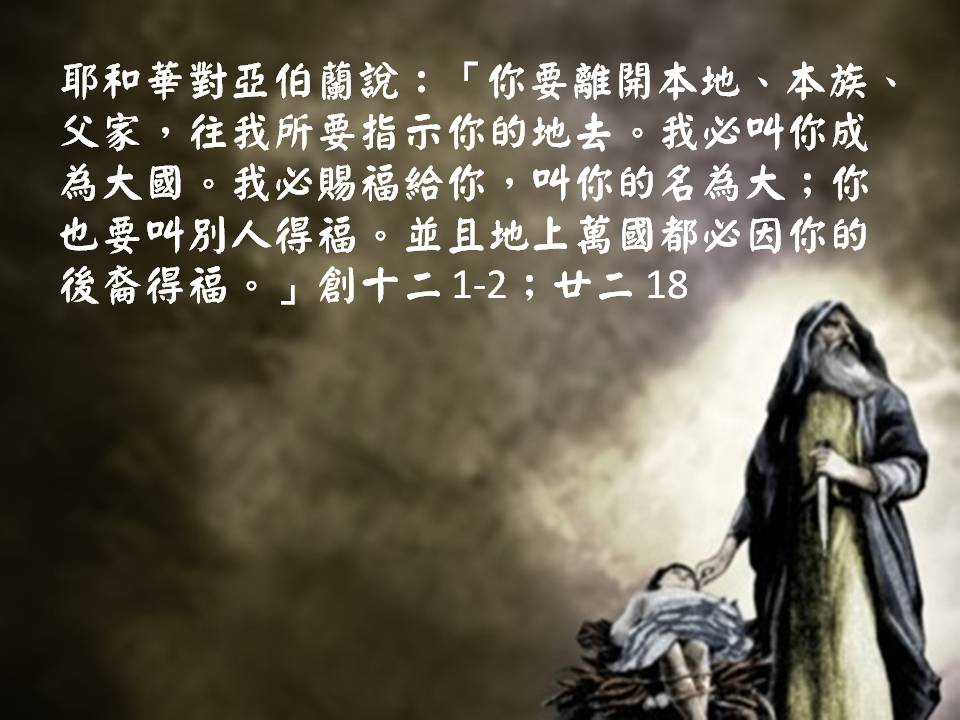
    等待耶穌的誕生早在四千年前就開始,神對亞伯拉罕説:「你要離開本地、本族、父家,往我所要指示你的地去。我必叫你成為大國。我必賜福給你,叫你的名為大;你也要叫別人得福。」(創十二 1-2);「地上萬國都必因你的後裔得福。」(創廿二 18),亞伯拉罕的後裔(The Seed of Abraham)是單數,指的當然是亞伯拉罕的後裔耶穌(參太一 1),亞伯拉罕信神,神因此稱他為義,他一生等待救主的降臨,死的時候,仍未曾得到,他這樣的等,值得嗎?


    4. 六百年之後,神對摩西説:「我必在他們弟兄中間給他們興起一位先知,像你。我要將當說的話傳給他;他要將我一切所吩咐的都傳給他們。」(申十八 18),摩西在等,死的時候,還沒有得著,值得嗎?


    5. 又等了四百年,神對大衛説:「我必使你的後裔接續你的位;我也必堅定他的國。你的國位也必堅定,直到永遠。」(撒下七 12;16),人類一直在等,等待這位亞伯拉罕的後裔、大衛的子孫的降臨,值得嗎?


    6. 又過了五百年,先知以賽亞預言:「因有一嬰孩為我們而生;有一子賜給我們。政權必擔在他的肩頭上;他名稱為「奇妙策士、全能的神、永在的父、和平的君」(賽九 6),我們一直在等這位和平的君的降臨。

    又等了五百年,直到保羅説:「及至時候滿足(The Fullness of Time),神就差遣他的兒子,為女子所生,且生在律法以下,要把律法以下的人贖出來,叫我們得著兒子的名分。」(加四 4-5),像一個懷了孕的婦人一樣,時候滿足,就把孩子生下來,二千年的等待,時候滿足了,路加用同一個字去形容馬利亞懷的孕「滿了」日期,就生下了耶穌(路二 6),第一個聖誕夜,救主誕生了,二千年來的等待是否值得?


    7. 路加第二章用一個老人--西面,代表了這兩千年的等待,經文説西面素常盼望(waiting)以色列的安慰者的來臨(25),「盼望」這一個非常特別的字,有兩個含意:1)等待、期盼(Expectant waiting);2)拿起、接受(Take up, receive)的意思。

    西面的等待不是一種被動的等待,好像我們等太太出門一樣,等、等、等,是被動的,是被迫的,是不願意接受的,也不願意拿起來。

    西面的等待是主動的等待,是擁有要來臨的,是接受等待要發生的事,好像我們建第三期的教會教育大樓一樣,三年前只是一個異象,連一塊磚頭也沒有,但我們擁有這異象,拿起將要來臨新的大樓,積極的等待它的來臨,這個大樓終於即將落成。

    主動的等待又如懷孕的婦人等待孩子的出生,盼望看見孩子的臉,孩子在母腹中成長,將要來臨的一日比一日近,這正是西面的等待。


    一、我們要學習主動地等待救主的降臨


    1. 我們要向西面學習主動地等待救主降臨。

    2. 西面不是普通人,他是一位「又公義又虔誠」的人,前一個字是猶太人形容受人敬重的義人,第二個字是希臘人形容德高望重的人,他與神同行,「有聖靈在他的身上」(25),與神的心相通,擁有神對人類的計劃,救主的降臨是他的事,他擁有「以色列安慰者來臨」的異象,這是主動的等待,盼望的等待,神要我們這樣去等待救主的再來。

    3. 這種的等待否值得,你可以打賭,這是絶對值得的等待!

    當西面等到救主的時候,當他把主耶穌抱在手中的時候,他説:「主啊!如今可以照你的話,釋放僕人安然去世;因為我的眼睛已經看見你的救恩!」(29-30)


    西面所等待的是神「在萬民面前所預備的:是照亮外邦人的光,又是以色列的榮耀。」(31-32)你能否感受西面的喜樂與滿足?!你的人生曾否有過這樣的經歷?等到了就可以安然去世?

    孔子説:「朝聞道,夕可死矣!」世上真有這種道理,早上聽了之後,晚上就可以安然去世?我相信你主日不論聽了什麼好的道,晚上也不會甘心去世!Gallup Poll 説,現代人最大的願望普遍是這三個:1)多賺一點錢;2)減肥;3)找到愛情。


    當我們終於等到這些東西的時候,我們都不想死,好不容易等到好日子來到,有錢了,瘦身了,有了愛情了,當然不想死!今天我們等的東西是否真的值得?


    賺多一點錢又怎麼樣?有人拿辛苦賺來的錢去炒股票,心情跟著股票的升降而上上下下,值得嗎?

    4, 西面代表了人類兩千年的等待,救主終於誕生了,時候滿足了,神就差他的兒子,為女子所生,要叫我們得兒子的名份,對西面來説,這是完全值得的等待。

    我們等待耶穌再來也應該如是,擁有它、接受它,將你的人生目標與耶穌再來的事較正,積極接受與擁有耶穌再來的應許,等待耶穌的降臨。

    例子:當我讀神學的時候,我的院長是美國有名的神學家,Dr. John Walvoord. 他是末世論的專家,對耶穌再來的應許,不單只清楚明白,更接受擁有主再來的應許,他領導神學院從三百學生,增長至一千七百學生,成為全美國最大的神學院之一,並興建了五座教室大樓,神學院有五年、十年、二十年的長遠計劃,但每一年他都要把神學院辦得最好,因為他知道主耶穌隨時都可以回來,明年的計劃不一定存在,今天就要活得最好,全所有的奉獻,沒有保留。

    一九七九年六月,我剛完成第一年的神學課程,約翰院長的第三個兒子,提摩太,醫學院剛剛畢業,年廿五歲,在去實習的路上遇上車禍死亡,全校的師生都非常難過,但院長因為相信主再來的盼望,使他可以把眼淚擦乾而得安慰,這是西面的等待,活潑、有能力、與積極的等待。

    約翰院長寫了超過六十本的書,大部分是有關主再來的書,在我的書架上有好幾本他的著作,並有他親筆簽名,在他的簽名之下,一定有同一節的經文:啟示錄廿二章廿節,「證明這事的說:「是了,我必快來!」阿們!主耶穌啊,我願你來!」

    約翰死的時候,年九十二歲,去世前幾星期還講道,帶著盼望而離去,死的時候還未曾得著所應許的,但卻存著積極的盼望與等待,去見他一生等待的主。

    你今天如何等待耶穌的降臨?

    5. 幾個主日之前,我分享十個童女的故事的時候,我們曽經説過,這種積極的等待,有預備的等待,不是單只忍耐而已,西面式的等待是一種修養與內心的操練,是一種屬靈生命的表現。讓我們一同來學習紀念救主的降臨,操練積極地等候救主第二次的降臨。

    建議一:買幾根的蠟燭,晚飯的時候,點一點蠟燭,提醒自己救主將要來臨,以下是一免費的網站,有每日讀的經文建議:

    https://www.youversion.com/reading-plans/26-rediscovering-the-christmas-season

    建議二:你若有小孩子,以下是一些每日活動的建議,幫助你建立屬靈家庭的傳統,操練內心的敬虔,一家積極地等待主的再來:

    https://www.youversion.com/reading-plans/216-countdown-to-christmas

    試一試!


    二、我們要相信地等待救主的降臨

    1. 等待救主的降臨不單只是一種内心屬靈的操練,更是我們的信心的操練。

    2. 關於西面的等待,還有一點我們需要注意的,聖經告訴我們,神是全能、全智、全愛的神,西面的神是無所不能,至高在上的神,而人是有限的,你與我沒法獨力生存,所以我們要等待,等待是我們的命運(Waiting is our destiny.)

    Lewis Smedes: "Waiting is our destiny. As creatures who cannot by themselves bring about what they hope for, we wait in the darkness for a flame we cannot light. We wait in fear for a happy ending that we cannot write. We wait for a "not yet" that feels like a 'not ever.'"

    我們沒法像神一樣,用泥土造人,吹一口氣,就成了有靈的活人,我們生小孩必需要等,等待神賜下孩子,懷孕並不是人能完全掌控的事,還要等懷胎十個月,才能把孩子生下來,等待是我們的本質必需要的。

    在黑暗中,我們不是光,要把黑暗驅走,我們只好等光的來臨。

    在罪孽中,我們無力自救,只有等待救主的來臨。

    彎曲的我們不能變直,只有等待神降臨,把曲的變直,破碎的,我們不能使它重圓,只有等候神的醫治,我們才能復和。

    世界的結局不是由我們寫的,我們等待結局的來臨﹐所以神要我們「等候神」,等候神在舊約出現四十三次,是人的本份,反映我們的有限性,新約最後也以「等待主再來」而結束(參啟廿二 22)。

    3. 可惜我們卻不願意等,我們要的東西,我們希望是現在就得到,甚至是要昨天就得到,好像我們是老闆一樣。

    例子:單身的弟兄姊妹時常問的一個問題,神既然知道我的需要,也沒有給我獨身的恩賜,為什麼他要我一直在等?神是全能的神,他説命就命,説成就成,為什麼他不出手?為我安排我的婚姻大事?為什麼神要我等?

    我們有些人在等家人的改變,等配偶的改變,已經等了很久了,我們希望它今天就發生,為什麼神要我們一直等下去?他又不是沒有能力,為什麼神好像故意拖延,要我們一直在等?

    (停頓一下!)

    4. 我們要明白一件事情,神與人不同,神做事從來不瘋狂,也從來不犯錯;從來不焦急,也從來不誤事;從來不衝動,也從來沒有任何的疏忽!到了時候,神説的必成就!一切他都有定時,愛情?家人的改變?都在他全智與全愛的大能之下,有定時。

    就如救主第一次降臨一樣,時候滿了,神差他的獨生子,為女人所生,使我們得兒子的名份,救主第一次降臨,是最好的時候,二千年的等待並沒有白費!亞伯拉罕、摩西、大衛、以賽亞與舊約的聖徒都沒有白等,他們死時候是憑著信心而死,並沒有得著所等待的,但他們的等待沒有落空,時候到了,信心就得到結果了。

    同樣,耶穌第二次降臨,到了時候,必定成就,或許是明天,或許是明年,或許是幾千年之後,耶穌隨時都可以回來,這一次的降臨,耶穌要審判世界,神的國要降臨,既是這樣,我們必需要等,積極地等,接受它的等,擁有它的等,等候那得贖的盼望。

    是否值得?你可以相信,是非常值得的!那時不再有死亡,一切的眼淚都要擦乾,不再有痛苦,不再有罪惡的捆綁,我們要做神的子民,神要永遠與他的子民同在!我們必需要等!

    保羅説:「我們這有聖靈初結果子的,也是自己心裡歎息,等候得著兒子的名分,乃是我們的身體得贖。我們得救是在乎盼望;只是所見的盼望不是盼望,誰還盼望他所見的呢?但我們若盼望那所不見的,就必忍耐等候。」(羅八 23-26) 我們所等待的是那得著兒子的名分之日子,這等待是完全值得的,我們必需要等!


    結論

    等待救主的降臨是一種的操練,怎樣去操練?以下是一小小的建議:

    音樂是神賜給我們聖誕的時候一份厚禮,許多的聖誕詩歌與音樂都是為紀念耶穌的誕生而寫的,它幫助我們紀念救主的降臨,也可以幫助我們的心與神相連,你可以選一、兩首聖誕的詩歌,甚至任何你喜歡的敬拜詩歌,掛在嘴邊,時常在這聖誕的季節去思念救主的降臨,親近神,操練等候神,培養那一份信心,培養那一份的敬虔,在這聖誕的時候,等候神。

    這是我選在這一年的聖誕季節操練敬虔的一首歌,與你分享:


    討論問題

    1. 你今年過聖誕有沒有什麼的計劃?請分享!
    2. 你的家有沒有什麼過聖誕的傳統?你認為這些傳統有什麼意義?為什麼好的屬靈傳統是那麼重要?
    3. 聖誕節對你有何意義?
    4. 西面的故事或者你已經很熟識,他的故事對你有何啟迪?
    5. 什麼是積極的等待?請舉一些實際的例子。
    6. 你計劃如何紀念救主的誕生?如何等待救主的再來?
    7. 請分享一、兩首詩歌或音樂是你最喜歡的,又是幫助你預備等候神的。
    8. 為什麼等候神是那麼重要?等候神最大的困難是什麼?如何才能克服這些困難?


    回應詩歌


    寫這篇講章的過程與一些的考量:
    林永健

    1. 今年開始的時候已經計劃在聖誕的時候,分享這將臨期的系列信息,希望能把這教會優良的傳統傳承下去。我發現我們的信徒愈來愈世俗化,聖誕節成了吃、喝、玩耍的節日,缺乏屬靈的意義,對教會的傳統非常陌生,把「將臨期」的傳統重新介紹給會友,希望我們一起操守敬虔,重尋聖誕的真義。

    2. 第一講是「預備」(Preparation),第二講是「盼望」(Hope),第三講是「喜樂「(Joy),第四講是「愛」(Love),第五講平安夜是「平安」(Peace)。

    3. 聖誕的故事耳熟能詳,不容易但卻實在需要回到經文故事中作者的原意,這五講雖看似是專題式的講道,但仍是以一段經文為主,以作者的中心思想為本,如第一講的中心思想是西面的等待,他代表了以色列人二千年的等待,他的讚歌與等待成為我們今日等待救主降臨的榜樣。

    4. 從西面等待救主的降臨成為我們等待救主的再來的榜樣,是否有聖經的權威?是否借鏡式的應用?聖經有多處經文教導我們等待救主再來的靈訓,「我們這有聖靈初結果子的,也是自己心裡歎息,等候得著兒子的名分,乃是我們的身體得贖。我們得救是在乎盼望;只是所見的盼望不是盼望,誰還盼望他所見的呢?但我們若盼望那所不見的,就必忍耐等候。」(羅八 23-26)講章也以這經文為結論,西面的見証是我們的榜樣。

    5. 以等待五分鐘才開始講道為引言,3-D 的實際體驗,效果不錯,時間有點趕,會眾都很留心,沒有坐立不安,也沒有人起來跑掉。

    6. 應用要落實並不容易,等待耶穌的再來,紀念耶穌的誕生,都不是容易實踐的行動。

    7. 「這樣等待是否值得?」我用這問題連貫各小點,結論是:「完全值得!」西面就是一個好旳例子,等到了,就滿足了,甚至可以安然去世!

    8. Here is an article on Waiting for singles by Tim Laitinen


    Waiting, Waiting, Waiting
    Tim Laitinen

    Waiting.

    Waiting, waiting... waiting.

    It's what a lot of us seem to be doing a lot these days, isn't it? Waiting.

    And we’re waiting for lots of things. Christ’s return, of course! But also a new job, perhaps. Or for the traffic in front of us to start moving again. Maybe an important e-mail. Or a report from our doctor.

    We wait, and wait, and wait some more. About the only thing for which we never have to wait is, well... waiting.

    Whether we like to admit it or not, many of us single believers are waiting on some sort of clarification on our marital status. We’re not waiting for confirmation that we’re without a spouse! Our lonely apartment – not to mention our lonely ring finger – already confirm that we’re not married.

    No, many of us wait – even if it’s subconsciously – to see if we’ll ever get married, or if we have the “gift of singlehood” and just don’t know it yet. Some single believers seem quite capable of going through life without so much as checking “single” when they’re filling out their taxes. For them, being single exists as just another generic part of their identity, like their shoe size.
    Others of us wait.

    Maybe spiritually, we know that God’s timing is best. Maybe we’re even relieved that we didn’t commit too early to a relationship that would have unraveled, a miserable specter we may be watching unfold in too many of our friends’ rocky marriages. Maybe contentment with our singlehood is something that comes and goes, like the tide, betraying the reality that while overall, we’re satisfied in theory with waiting, it’s the waiting in reality that’s beginning to bug us.
    Waiting can be excruciatingly frustrating. Hopefully, your parents, family, and friends aren’t bugging you about how long they’re having to wait for you to get married. Hopefully, too, your unsaved friends aren’t badgering you about waiting for marriage at all, as if living in sin is better than being married anyway. You’d likely not have to wait nearly as long to find somebody willing to do that with you.  

    When we trust that the good things God teaches us in His Word are better than throwing in the towel out of impatience, however, we realize that giving up on Him can only harm us.
    Then again, sometimes we’re waiting, only we’re not sure what we’re waiting for. Are we waiting for God to bless us with a spouse, or are we waiting for God to bless us with contentment regardless of whether we ever get married?

    Sometimes, too, patience can be its own reward. Either way, God will always reward it.

    Waiting By the Side of the Road

    About two thousand years ago, a blind beggar languished along the dusty roadside outside the gates of Jericho, which even then, was one of the world’s oldest cities. This blind beggar's name was Bartimaeus, and although we don't know how old he was, we can assume his was a undesirable life.

    Whether he'd been blind from birth, or blinded from some accident or disease, being denied sight for any length of time in that culture would have been sheer misery. It's bad enough today in North America, where our culture is quite progressive in curing, treating, or providing assistance for people with vision problems. Two thousand years ago, blindness was a virtual prison.

    About all a person like Bartimaeus could do back then was, if he was otherwise healthy enough, take up a spot alongside a road and beg all day long. Every day. Hoping that enough sympathetic passers-by would toss enough money your way to buy a simple supper. It’s possible that many people in Jericho knew Bartimaeus, or at least knew of him, since he likely spent all of his days begging, waiting for somebody to take pity on him.

    Waiting, all day. Sometimes calling out when you heard people approaching, then slumping back against a wall or rock, and waiting some more.

    Waiting, calling, begging. But most likely, mostly waiting. Waiting in utter darkness, even as you could feel the sun beating down on the body you couldn’t see.

    Suddenly, Bartimaeus heard more than just the shuffling of passers-by. There was a commotion, and he learned that Jesus of Nazareth was going to be passing right by his spot by the road!  Maybe Jesus would heal him!

    He had to get Christ's attention.

    So he hollered out, calling on Jesus to have mercy on him. He made such a ruckus and racket, calling out so desperately, that people in the crowd, who had relegated him to the sidelines of life, sitting out of the way of normal people, told him to be quiet. 

    Yet undoubtedly, this was just such an opportunity for which Bartimaeus would likely have never before dreamed. Maybe he'd spent his time waiting by the side of the road not only for enough money to make it through the day, but waiting for death itself. The commotion he himself causes in this passage creates the impression that he'd immediately realized this might be his one chance in his entire life to be healed from blindness - and he was frantically hoping to seize the moment.

    Christ is the Creator of Perfect Timing 

    Christ, of course, knew Bartimaeus was nearby on the roadside. And he stopped, calling Bartimaeus to Himself.

    Quickly, the crowd changed its tune, turned to Bartimaeus, and said, "well, what do you know! You've gotten His attention, and He wants to talk to you."

    As you can imagine, Bartimaeus didn't need any more urging. He jumped to his feet, likely needing to be steadied by people in the crowd who only moments before were telling him to shut up. He threw off his cloak, perhaps so fully assured that Christ would heal him, he'd be able to retrieve it after his miracle, and he could see where it had fallen.

    And sure enough, Christ performed his miracle, based on his blunt, honest, earnest faith.
    We Christians know this story because of Christ’s amazing ability to heal a blind man. And indeed, Christ’s power is the core of this miracle. How easy it is for us to overlook, however, the amount of time Bartimaeus had to spend waiting, and not even knowing what he was waiting for! Christ knew He was going to heal Bartimeaus, but the blind beggar himself had started his day as he had every other one, with the imminent restoration of his sight completely off his radar.

    Christ knew what Bartimaeus needed, just like He knows what we need, whether we’re actively waiting for those needs, or not. Yet the emotional, spiritual, and mental blindnesses with which we suffer may still be things we have to wait through until God's appointed time, when our waiting will finally be over.

    Waiting can only be true agony when you don't trust the Person for Whom you're waiting. 
    May the Lord grant us the grace to wait as long as He would have us wait, and to wait with patience, hope, and even joy.

    As the psalmist has so poignantly phrased it, wait on the Lord. Be of good courage, and He shall strengthen your heart. Wait, I say, on the Lord!

    From his smorgasboard of church experience, ranging from the Christian and Missionary Alliance to the Presbyterian Church in America, Tim Laitinen brings a range of observations to his perspective on how we Americans worship, fellowship, and minister among our communities of faith. As a one-time employee of a Bible church in suburban Fort Worth, Texas and a former volunteer director of the contemporary Christian music ministry at New York City's legendary Calvary Baptist, he's seen our church culture from the inside out. You can read about his unique viewpoints at o-l-i.blogspot.com.

    Publication date: December 4, 2012