Sunday, January 24, 2016

計算代價,《跟隨我二》,路 14:25-33

計算代價
《跟隨我二》
路加福音十四章廿五至三十三節


林永健牧師
福遍中國教會
2016.01.24
國語堂


引言

1. 我相信大家都很熟識「我已經決定要跟隨耶穌」這一首歌,1979 年最後的一天,十二月三十一日的零晨,Urbana 學生宣教大會以神聖的聖餐結朿了四天的聚會,當年的講員陣容強大,Billy Graham, John Stott, Luis Palau, Elisabeth Elliot, David Howard Adeney... 但他們講的現在我一句都不記得,只記得大會結朿之後,一萬七千人在聖靈的感動之下,輕輕地唱出了這一首歌,「我已經決定要跟随耶穌」,:

我已經決定,要跟隨耶穌,
我已經決定,要跟隨耶穌,
我已經決定,要跟隨耶穌,
永不回頭,永不回頭!


這首歌並不是那麽容易唱的,跟隨耶穌的意思是以耶穌為主,接受祂的邀約,經歷基督徒豐盛的生命,跟隨耶穌需要代價,甚至是極重的代價,第二節:
 
雖無人同走,我仍要跟隨,
雖無人同走,我仍要跟隨,
雖無人同走,我仍要跟隨,
永不回頭,永不回頭!

跟随耶穌是孤單的,雖無人同走,我仍要跟隨,真的是不容易。如果你願意,請你和我一同輕輕地唱一次。

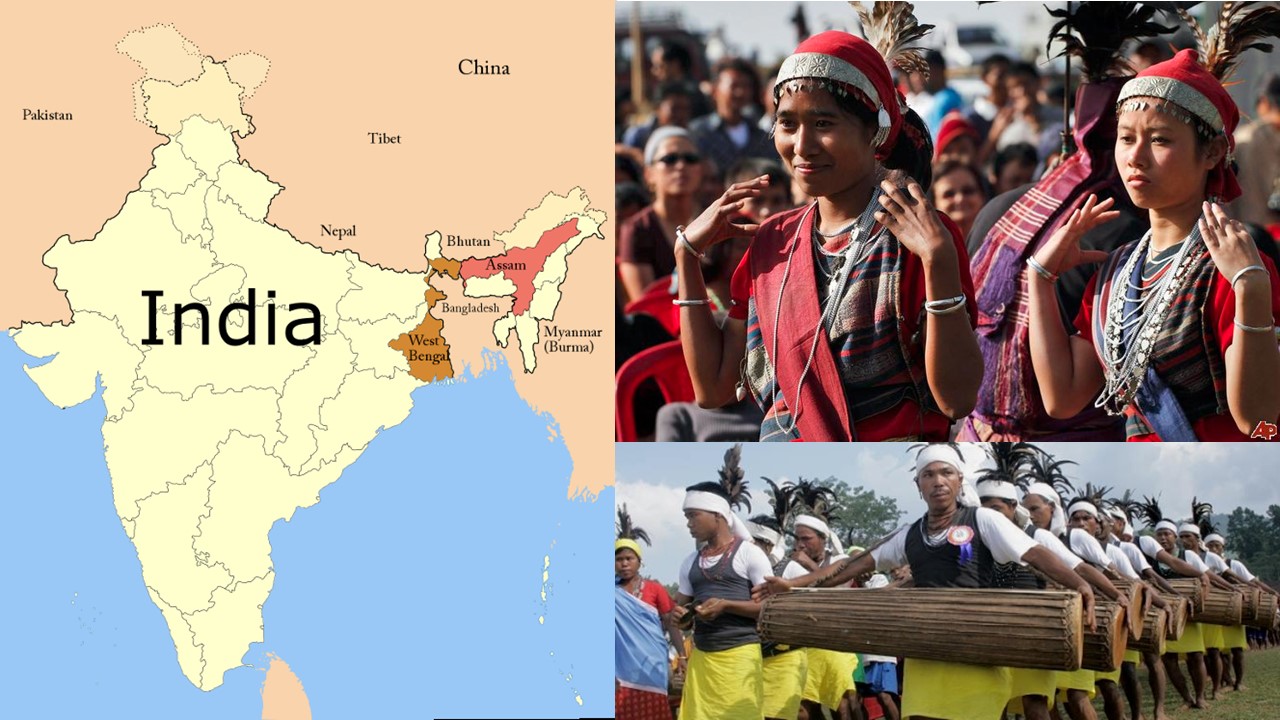
2. 這首歌的歌詞來自印度東北亞撒省(Assam)的格羅族(Garo tribe)。 亞撒省位於喜馬拉亞山脈南部,該省居民多數是山地原住民,其中三分之二居民信印度教,四分之一信回教。十九世紀中,有一位格羅族的人經威爾士宣教士的努力,相信耶穌,當村長在眾人面前要他放棄信仰,威脅他的生命與家人的安全,這位基督的跟隨者最後的一句話:「我已經決定要跟隨耶穌,永不回頭」,「雖無人同走,我仍要跟隨」,結果他的妻子被殺,他也因此殉道,因此有不少格羅族人受感動成為基督徒。


對他們來講,要跟隨耶穌,許多人必須脫離家族親人,放棄繼承權,被社會遺棄,朋友鄙視。 要唱出:「我已經決定要跟隨耶穌,永不回頭。」走上這不歸路,是需要無比的勇氣。

這首歌的歌調傳說是印度聖徒孫大信譜的,其背景為他信了主耶穌,家人欲改變他的決定,用了很多方法來攔阻他,他的叔父帶他到家族的寶庫中,若他願意放棄主耶穌,就將寶庫的一切寶物全數給他,可是孫大信寧放棄寶物,也要揀選主耶穌,不願放棄對主耶穌的忠心,並寫下此首詩歌。他因為跟隨耶穌而放下一切。

1958年,浸信會主日學音樂主任芮諾士(William J. Reynolds, 1920 - )將這首歌印在聖詩集,
這首歌原文僅兩節,由柯拉克(John Clark)加上第三節,並由芮諾士配上和聲。

十架在前面,世界在背後,
十架在前面,世界在背後,
十架在前面,世界在背後,
永不回頭,永不回頭!

嗣後,巴樂斯(Cliff Barrows )等將該曲調改編,加上第三節。成為葛培理佈道會常使用的決志歌。唱這首歌,需要無比的勇氣和毅力。二千年來,多少基督徒為跟隨耶穌而付上各樣的代價!他們用生命來詮釋這首詩歌。

3. 上週我們讀了耶穌的邀約,邀請我們去得耶穌給豐富的生命,耶穌的邀約是救恩的邀約,也是跟隨耶穌的邀約,邀請我們去跟隨主,做狗的基督徒,以耶穌為主要,我的需要為次要。

今天的經文說「有極多的人和耶穌同行。」(路 14:25)


一、跟隨耶穌需要成事與必勝受苦的代價,14:27-32


1. 耶穌往耶路撒之去,是要上十字架,門徒與同行的人以為往耶路撒冷是要得榮耀、與權柄,不明白耶穌去耶路撒冷是釘十字架受苦,他轉過來對他們說:「凡不背著自己十字架跟從我的,也不能作我的門徒。」(路 14:27)

2. 跟隨耶穌是跟隨耶穌走十字架的路,這是一條受苦的路,需要付上成事與必勝的代價。


3. 十字架是受苦的記號,並非一個美麗的幾何圖畫,不是基督教的一件裝飾品。

主後六至七年左右,猶太人曾經跟從一個猶大家族的領袖起義,反抗羅馬皇帝,結果被羅馬將軍瓦如斯(Varus)帶兵剿平,在這一場叛亂中,有二千名猶太人被殺,其中幾百人被判釘十字架的死刑,行刑時,把幾百個做好的十字架效放在路旁,將死囚押到那裡,迫使他們自己背起十字架,一直到行刑場去,最後,把他們釘在十字架上懸掛起來,對於當時聽到耶穌說:「凡不背起自己十字架跟從我的,也不能作我的門徒。」這句話的人來說,這是一幕慘痛的經歷,記憶猶新,他們有的親眼見過,有的親耳聽過這血淋淋的歷史事實,是他們永遠也無法忘記的。

4. 耶穌為什麼要用這樣殘酷的經驗來說明跟隨主的代價?難道祂不怕把人嚇走?誰會願意付上這沉重痛苦的代價?

跟隨主應該多講跟隨主的好處!鼓勵人激勵更多人跟隨耶穌,是不是?耶穌說這句話的時候,祂不是一位撫摸安慰人的牧者,而是一個有權柄要求人放下自己來跟從他的將軍,「你若要跟隨我,你必需要背起自己的十字架。」

注意耶穌的語氣,反面的前題、反面的結語,雙重反語(double negative),而且重複了三次:

1)人若不愛我勝過愛自己的父母、妻子、兒女、弟兄、姐妹,和自己的性命,就不能作我的門徒。(26)
2)凡不背著自己十字架跟從我的,也不能作我的門徒。(27)
3)你們無論什麼人,若不撇下一切所有的, 就不能作我的門徒。(33)

這不像一個慈愛的牧者,用青草地溪水邊來引領祂的羊來跟隨祂,卻像一個掌兵權的蓋世將軍,命令跟隨他的人付上一切的代價去跟隨他!

5. 跟隨耶穌,背十字架,付上受苦的代價是什麼意思?

第一、跟隨耶穌與基督一同受苦,不是指人生的生老病死的痛苦,腰痛身體不舒服,這種苦不是為跟隨耶穌付的代價,跟隨耶穌與沒有跟隨耶穌的人都一樣會經歷生老病死的痛苦,不是背十字架跟隨主受的苦!

也不是我們罪性犯罪所帶來的痛苦,例如:我犯了罪被妻子責備,晚上睡沙發,我們不能說這是背十字架忍受苦難!我沒有好好的學習,考試成績不好,上不了好的大學,結果一生受了惡果,這不是「天天背起自己的十字架!」

第二、背十字加跟隨主的意義是因為順服神,因為遵守神的旨意,因為堅持作狗的基督徒,而必需要付的代價,甚至是痛苦的代價,也不後退!

基督徒並不是把苦難「神化」,天天去自找苦吃,受苦的時候,人花怒放,「又可以吃苦了,又背十字加了、嘻嘻!」不是這樣的!我不喜歡天天長時間工作,不求名、不求利,一週工作七、八十個小時,但若是遵行神的旨意,再痛苦,我也願意!我不喜歡背負重擔,整夜難眠,但若是為了主的托付,再重的担子,我也願意!我討厭被攻擊、被誤會,但若是必需忍受的苦楚,我甘心接受,茹苦含辛,也在所不計!

這就是跟隨耶穌付代價的意思。

耶穌吩咐我們背十架,祂對我們的要求,難道不是祂自己親身的經歷!祂並不喜歡十字架的痛苦,客西馬利園中他禱告神求神把十字架的苦杯移去,痛苦並不是神聖的,可喜悅的,但耶穌卻忍受十字架的痛苦,赤裸裸的被掛在木頭上,受盡羞辱,付上生命的代價,只因為遵行天父的旨意,拯救世人,這是十字架的路,也就是跟隨耶穌的人,你和我需要有的決心,遵行神的吩咐,一切在所不計。

當年格羅族的這位信徒,「己經決定跟隨耶穌,永不回頭。」他付上了生命的代價。孫大信因為跟隨耶穌,放下了一切的財寶,背上了趕出家族的痛苦,付上了沉重的代價。

第三、可能我們認為像孫大信這些的例子離我們很遠,請注意耶穌的話:背上「自己」的十字架來跟從我!另一段經文還加上了「天天」背「自己」的十字架跟隨主,今天你跟隨主付的代價和我跟隨主的代價可能並不一樣,每天我們選擇跟隨主,要付的代價都不同。

可能你認為牧師是己經撇下一切跟隨主了,但我們牧師同樣天天做選擇,跟隨耶穌付上我們的代價。我回顧我的一生並沒有太多的苦難,我不認為我因為跟隨主受了很多的苦,但每一天我都面對跟隨主的選擇,我苦選擇跟隨主,我必需付上代價,背起我的十字架跟從主。

最近天氣那麼冷,是否早上起來安靜親近主?還是回去温暖的被子裡?是要付上代價的!每天去教會上班,不為名、不為利,努力建立健康的教會,是付上了代價。為弟兄姊妹背負重担,整夜難眠,你可能也是,為了事奉神,付上代價,花錢出力,背負重担,不是為了自己,是因為跟隨主,付上了代價。

耶穌用一個將軍的命令語氣,「你若不背起你的十字加,付上代價,你不能作我的門徒。」做不到,就算了吧!主不需要不付價的人跟從神。

你若跟隨耶穌,只是為了求餅,算了吧!你不能作主的門徒!
你若跟隨耶穌,只是為了求醫治,算了吧!你不能作主的門徒!
你若跟隨耶穌,只是為了求神蹟,算了吧!你不能作主的門徒!
你若跟隨耶穌,只是為了求經歷,算了吧!你不能作主的門徒!

這是主要與次要的問題,若你主要是為了餅、為了醫治、為了經歷,算了吧!

跟隨耶穌需要決心,需要跟隨到底的決心,需要成事、打勝的代價。

6. 耶穌說了兩個同義的比喻去說明跟隨耶穌到底需要的代價:1)蓋樓;2)打仗。

蓋樓(28-30)
「你們那一個要蓋一座樓,不先坐下算計花費,能蓋成不能呢?恐怕安了地基,不能成功,看見的人都笑話他,說:『這個人開了工,卻不能完工。』」

蓋樓只蓋了一半,安了地基卻沒有完成,只有一半的決心,付一半的代價,沒有用,只會給別人笑話,跟隨耶穌也是一樣,只付一部份的代價的不能作主的門徒。耶穌呼召人跟隨主完全付上代價,要堅持,有始有終。我們都有貓和狗的特性,我們都願意跟隨主,付上代價,但在日常的生活中,每天的決定裡,半信半疑,只做一半。如果耶穌只死了一半,在十字架上跳下來,會有什麽的結果?救恩就沒法完成,神的旨意還是沒有完成。你說是嗎?

打仗(31-32)
「或是一個王出去和別的王打仗,豈不先坐下酌量,能用一萬兵去敵那領二萬兵來攻打他的嗎?若是不能,就趁敵人還遠的時候,派使者去求和息的條款。」

一萬兵如何能敵二萬敵人?我們若不全力以赴,沒有保留怎能打勝仗?若只有 Part-time 跟隨耶穌,週末跟隨耶穌,週日作貓!或早上做狗,晚上做貓!可能嗎?

這兩個比喻說明作主的門徒,需要有成事與必勝的代價,堅持、全力以赴,跟隨主,這是跟隨耶穌的代價!


7. 要求高嗎?耶穌的要求絶不含糊,若夠不上,不能作主的門徒!

例証
袁幼軒(Christopher Yuan)是一位同性戀者(gay),生活遠離神,因為販毒而入獄,判刑六年,而且身患愛滋病,父母因為這個兒子傷心欲絶,母親在自殺的路途上遇見了神,信了耶穌,生命改變,為兒子禱告多年,袁幼軒在獄中信主,信主之後第一件事就是尋求神對同性戀行為的看法,聖經說:神是聖潔的,跟隨神的人也要聖潔,於是他立志過聖潔的生活,性方面完全聖潔(Holy sexuality),過單身的生活,對他的同性戀的慾念說不,這是極不容易的事,需要天天背起十字架,代上代價,逆流而上,而且是天天付的代價。


許多人因為他的見証而改變,作同性戀者跟隨神的榜樣,他去年在 Urbana 學生宣教大會上,說:「若跟隨耶穌你並不需要付上一切,你跟隨的不是耶穌!」(If following Jesus does not cost your everything, you have followed the wrong Jesus.)


二、跟隨耶穌需要付上放下人間至愛親情的代價,14:26

1. 跟隨耶穌,天天背自已十字架跟從主,對我們中國人來說,最難放下的是親情,是我們的父母與兒女,是嗎?我們愛我們的家人,兒女是我們的喜樂與盼望,他們好,我們快樂,他們不好,我們憂傷;他們成功,我們滿足;他們失敗,我們也感到失敗,我們願意為他們付上一切,他們是我們心頭肉。

2. 耶穌卻說:「人到我這裡來,若不愛我勝過愛(愛我勝過愛:原文作恨)自己的父母、妻子、兒女、弟兄、姐妹,和自己的性命,就不能作我的門徒。」(26)


祂要我們放下人生的至愛親情,甚至我們的性命,為什麽這樣嚴厲?為什麽祂要傷害人最寶貴的感情?跟隨耶穌為什麽不能只是一種的點綴?為什麽不能只是附加物?

3. 跟隨主,若不「恨」(希腊原文的意思)自已的父母、妻子、兒女、弟兄、姐妹,和自已的性命,就不能作我的門徒。

和合本翻為「愛我勝過愛...」是精彩無比的譯法,這是耶穌當時日常對話亞蘭文的意思,亞蘭文「恨」原意是指「愛得較少」、「愛得比... 少」(love less)。

作門徒跟隨耶穌是以耶穌作為我們終極的參考點來作任何安排,祂必定需要是你的至愛,唯一的主人,你才能作主的門徒。

你若愛父母、妻子、兒女、弟兄、姐妹,和自已的性命勝過愛神,那麽,算了吧!回家愛你以前所愛的好了,別來跟從主!

4. 耶穌的要求的正是祂自已做的選擇,他降世為人,選擇順服神的旨意,代價是離開祂至愛的天父,來到人間。在十字架上,掛念母親,無依無靠,傷心難過,選擇順服神的旨意還是選擇母親的親情?選擇接受從人、神、世界的離棄?還是選擇順服神的旨意?將神放在第一位?

當耶穌說:「人若不愛我多過愛父母、妻子、兒女、弟兄、姐妹,和自已的性命」,難道祂並不知道這選擇的代價有多沉重?

我的一位宣教士朋友,年青的時候與妻子決定作宣教士,來到中國服侍神十多年,說一口流利的普通話,回美照顧父母,之後再次準備出發去中國作宣教士,第二次的決定卻影响一對青少年的女兒,這一次,要獻上自已的女兒,比第一次決定來得困難十倍,長女不願意去中國,作父母的如何選擇?

北美從中國大陸來的神學生,在各大著名的神學院讀書,許多都有負担回國事奉,甚至不少的獎學金都有回國服侍的協議,但百分之九十的神學生畢業後都留在北美事奉,其中一個主要的原因是因為孩子的緣固,這些決定絕不容易,愛兒女是我們的天性!

跟隨耶穌遵行神的旨意並沒有第二條路比較容易、比較痛苦少,這是選擇做門徒跟隨神唯一的道路。對我們很多人來說,信耶穌是羅曼蒂克的,耶穌給人愛、安慰、幫助、鼓勵,少有願意擁抱耶穌終極的挑戰,「愛我多過愛父母、妻子、兒女、弟兄、姐妹,和自已的性命」!你願意嗎?

5. 戴紹曾生於中國,父親戴永冕是循理會的宣教士,八歲的時候,因為中日戰爭,全國的宣教士被迫離開,父母決定北上,安慰各地的傳道人,把兒女留在南部沿海地方,戴紹曾結果成為日本人的俘虜,關在東北潍县集中营,我相信一般人必定不了解這父母的決定,認為這是不負責任的父母,戴永冕跟隨神,以遵行神的旨意為最高的價值,神卻保守他的兒女,戴紹曾在集中营遇上了宣教士李達(Eric Liddell),1924 年巴黎奧運會四百米金牌選手,受李達影响,戴紹曾長大後一生被神使用,成為中國教會過去五十年的領袖。

6. 我的事奉之中,最困難的時候是我的孩子出了問題的時候,他們是我心頭肉,出了問題,我整個人都亂了,愛主勝過愛兒女真不是容易的選擇,我告訴自已,神愛他們比我愛他們更深,我的責任是跟隨主,我要學習把兒女交給神,把我的至愛至親交給神,需要勇氣去選擇,但這是跟隨耶穌的代價。

7. 最後耶穌的總結:「這樣,你們無論什麼人,若不撇下一切所有的, 就不能作我的門徒。」(33)


結論

1. 人若不能作主的門徒,因為不背十字架、因為愛親人多過愛神、因為不願意撇下一切,跟從主,他當會像鹽若失了味,沒有任何的價值,失去功能,甚至堆在糞裡也不合宜,只好丟在外面。


2. 你若不能作主的門徒,你一生可以生活很舒適,甚至無憂無慮,但你卻不能為神所用,變為無用失去味的鹽,丟在外面,有耳可聽的,就應當聽!

3. 你的選擇如何?你真的要計算代價嗎?


討論問題

1. 什麽是「背十字架跟從主」?請分享你的了解。試舉例說明之。
2. 背起「自已」的十字架是指什麽?請你分享你「自已」的十字架是什麽。
3. 耶穌用什麽語氣說:「 凡不背著自己十字架跟從我的,也不能作我的門徒」?為什麽?
4. 愛主勝過愛自已的父母、兒女、妻子對你有何意義?
5. 你願一生安適卻一生無用(useless)嗎?為什麽?


回應詩歌


寫這篇講章的過程與一些的考量:
林永健

1. 


Monday, January 18, 2016

耶穌的邀約,《跟隨我一》,路 14:15-24

耶穌的邀約
《跟隨我一》
路加福音十四章十五至廿四節


林永健牧師
福遍中國教會
2016.01.17
國語堂
英語堂


引言

1. 新年快樂,2016 將是挑戰性的一年,上週石油每桶的價錢下跌至三十塊錢之下,是美國十五年最抵的價錢,Morgan Stanley 與 Goldman Sachs 估計油價將繼下跌至美金二十塊,週一 BP 宣佈全球栽員四千人,包括休士頓地區,我相信其它石油公司也有栽員的計劃,2016 年的頭十五天,由石油股帶動下滑,美國股票券下跌一千五百點,損失超過五千億美元,2015 年休士頓失去了三萬與石油有關的工作,2016 年相信會更嚴重,變本加厲,大家心裡都不安。

這令我想起八零年代的石油危機,休士頓的經濟大倒退,我剛剛開始在教會中事奉,休士頓地區,八個人中就有一個人失業,失業人口達 13.3%,教會在五年之內失業的人超過幾百人,但在困難不景氣的時候,教會卻更興旺,弟兄姊妹更追求愛主,令我想起狄更斯《雙城記》中的經典名句,「這是最美好的時代,這是最糟糕的時代;... 這是光明的季節,這是黑暗的季節;這是希望的春天,這是失望的冬天!」


我的禱告是求神讓我們在 2016 年中,在人生的風浪中,下定決心跟隨神,這可以是最糟糕的時候,也可以是最美好的時候,耶穌說:「來跟隨我,你就不在黑暗裡走!」這是我的禱告。

2. 年初的時候,我們的主題是耶穌的吩咐「跟隨我」,我們從今天開始,一連四個主日,透過耶穌的四個比喻,來學習跟隨主,下定決心,不單只口講,更是以行動跟隨主作主的門徒。


3. 今天我們的經文是路加福音十四章十五節至廿四節:「耶穌的邀約」。

路加福音十四章開始的時候,記載耶穌與猶太人爭論安息人的真義,爭吵很厲害,耶穌責備法利賽人驕傲與虛偽,氣氛非常緊張。

第十五節,有一個同桌吃飯的人聽見這些話,希望緩和一下緊張的氣氛,打圓場地說:「雖然我們意見看法不同,但我們都能在神國裡一同享受天國的福樂。」


這豈不是我們的想法嗎?我們雖然有許多不同的基督徒,有些是委身的,有些是比較不委身的,有些甚至是主日的信徒,但我們最終也不都是上天堂嗎?有什麽分別?不要太緊張!

4. 兩週前美南華人差傳大會開幕禮的講員蘇鮑伯(Bob Sjogren)用貓狗比喻我們當中兩種的基督徒:1)狗的基督徒;2)貓的基督徒。

「狗兒有主人;貓兒有跟班!」人類一向將忠心、服務及信實等特性歸給狗兒,卻視貓兒的特性為依賴、冷漠與自我為中心,這是否是公平呢?也很難說!


5. 狗的基督徒的想法:「你愛我、你寵我、你餵我、你供養我,你一定是神!」我家的狗就是這樣的,牠有主人,只有一個主人,牠認定主人,跟隨到底,三步不離,狗的基督徒是跟隨耶穌,宇宙的中心不是我,是耶穌,祂坐在寳座上,一切包括你和我是為耶穌而存在的,祂是神。


狗的禱告是:「願你的國降臨,願你的旨意行在地上如同行在天上!」

6. 貓的基督徒的想法:「你愛我、你寵我、你餵我、你供養我,我一定是神!」我是一切的中心,耶穌為我而死,耶穌為我而生,耶穌與我同在,讓我的人生風平浪靜,我的需要最重要。

貓的禱告是:「甚願你賜福與我,擴張我的境界,常與我同在,保佑我不遭患難,不受艱苦。」(代上 4:10)這種的禱告好像神也垂聽!

這兩種基督徒都上天堂,不是嗎?貓或狗的基督徒最終也不是一樣嗎?有什麼分別?有什麼關係?

當年的猶太人非常虔誠,努力地守摩西的律法,傲視列國,以神的子民自居,認為自己必有神佑。耶穌卻用一個比喻挑戰他們這一種的錯誤的想法。


邀約的比喻

1. 「有一人擺設大筵席,請了許多客。」(路 14:16) 


2. 這些客人都回覆說要參加這筵席(R.S.V.P)。比喻的中心是耶穌的邀約,邀請人去赴耶穌擺設的大筵席,這邀約是什麽的邀約?上文有很清楚的指示:


路 9:23-25 「耶穌又對眾人說:「若有人要跟從我,就當捨己,天天背起他的十字架來跟從我。因為,凡要救自己生命的,必喪掉生命;凡為我喪掉生命的,必救了生命。人若賺得全世界,卻喪了自己,賠上自己,有什麼益處呢?」這就是耶穌的邀約,邀請你做狗的基督徒,跟隨耶穌,捨去自己,天天背起十字架,甘心受苦,付代價,以耶穌為主人。

邀約的對象是神家裡的人,猶太人,神的子民,他們已經答應了邀請,要出席,耶穌的邀約是救恩的邀約也是作門徒跟隨主的邀約。

我們很容易把這兩個邀約分開,我們信主作得救的基督徒,然後再考慮是否委身跟隨耶穌作門徒,在我們的經驗中,常有這樣的情況:信主多年一直做貓的基督徒,之後才回應神的吩咐做狗的基督徒,我們認為狗的基督徒只是做牧師、宣教士、長老等的人,不是一般的基督徒需要的選擇,是不是這樣?

3. 可是你若仔細研究耶穌的邀約,祂一開始就很清楚的說:「來跟隨我!」祂不繼地說:「跟從我的,就不在黑暗裡走,必要得著生命的光。」(約 8:12)出黑暗入光明,救恩的邀約就是來跟隨耶穌的邀約,耶穌從來沒有把救恩與跟隨主分開的。

我們的信仰是跟隨主的信仰,今天你要作選擇,你是否跟隨主?做狗的基督徒?


4. 口講不算,你是否真願意放下自己,讓耶穌坐在你人生的寳座上?「到了坐席的時候,打發僕人去對所請的人說:『請來吧!樣樣都齊備了。』眾人一口同音的推辭。」(路 14:17)比喻最可悲的是這些被邀請的人都說要來,可是因為不同的原因,結果都沒有出席,眾人一口音的推辭,理由不同,結果都一樣,都沒有得嘗耶穌的筵席,耶穌給豐盛的生命!

今天我們裡頭都同時有貓與狗的特性,我們都願意跟隨耶穌,以耶穌為主人,同時我們在每天人生的選擇上,卻常常表現貓的個性,我最重要,我是上帝,我們的理由很多,結果都一樣,錯過了耶穌的邀約,沒有得嘗耶穌的筵席,耶穌給豐盛的生命!這是不是很可惜的事?


推辭

1. 第一個推辭的理由:「我買了一塊地,必須去看看。請你准我辭了。」(路 14:18)


2. 買了一塊地,沒什麼大不了的事,卻成為推辭不赴耶穌的筵席的藉口。買了一塊地,「必須」去看看!「必須」(necessity)是一個優先次次序的選擇決定(a priority judgment),去看看買了的一塊地明顥地比耶穌的邀約更重要,更優先!

我們一天忙的事情很多,我的時間表上充滿了各種的活動,我們都覺得很重要,「必須」:

  • 上班必須的;
  • 打球運動必須的;
  • 休閒旅遊必須的;
  • 照顧家人回去看父母必須的;
  • 有些投資必須的;
  • 吃什麼很重要;
  • 信仰也不可以缺少!

這樣像什麼?像一個過年的什錦盒!裡頭有七、八種不同的東西,每樣一點點,瓜子、糖蓮子、糖果等等,各式各樣的好東西,這樣的人生不是很美滿嗎?

這樣的人生唯一的問題:這是沒有「優先的人生」,沒有至愛,沒有主人的人生,如果我喜歡糖蓮子,這是我的至愛,吃了幾口之後就沒有了,在繁忙的人生中,忙、忙、忙,卻失去了優先的次序,信仰只是七、八樣好東西中的一種,這是沒有回應耶穌的邀約,沒有回應神的召命:來跟隨我!

「我已經決定跟隨耶穌,永不回頭。」這是一種優先次序的選擇!

3. 第二個推辭的理由:「我買了五對牛,要去試一試。請你准我辭了。」(路 14:19)


這是一位有錢的人,普通人有一對牛已經很不錯了,這個人有五對,表示他的地很大,可能有二百五十畝地,是個大地主,比一般人的財產多最少五倍。

錢常是人不願意跟隨主的原因!少年的官有願意跟隨主的心,他特意來見耶穌,但卻憂憂愁愁地離開,因為耶穌吩咐他把一切變賣來跟隨祂,他的財產很多,結果他錯過了跟隨主,榮耀神,改變世界的生命,他一生可能生活舒服,物質享受比別人好,卻錯過了豐盛生命的邀約,值得嗎?與耶穌十二門徒相比,他們把一切撇下跟隨主,得著了豐富的生命,你要做少年的官呢?還是願意做跟隨耶穌的門徒?人若賺了全世界,卻錯過了豐盛的生命,值得嗎?

4. 這不是說物質不好,世上一切美好的都是從神而來,好吃的是從神而來,漂亮的衣服是從神而來,房子從神而來,並非不好,而是「主要」(Primary)與「次要」(Secondary)的問題,若神是主人的話,祂的榮耀是主要,我的需要是次要;神的旨意是主要,我的財富是次要。

5. 鄭弟兄的見証。

錢與財富絕對不是主要,只是次要,豐盛的生命是跟隨耶穌的生命,選擇神為主要,金錢為次要。你的選擇如何?

6. 第三個推辭的理由:「我才娶了妻,所以不能去。」(路 14:20)


這人剛剛娶了妻子,直接了當說,不能去赴會!當年猶太人的風俗,請客只請男的,女眷不歡迎。這人剛娶了妻子,不能放下妻子不顧,我們認為夫妻關係很重要,的確是很重要,問題還是什麼是主要?什麼是次要?

娶了妻,難道參加一個晚上的宴會也不成?是不是藉口而己?找個理由不去!多馬福音同段的故事,更列了許多不同的理由,這些本來答應赴會的人,結果都沒有去:

  • 要去收租;
  • 要去預備朋友的婚宴;
  • 買了一個農場.... 等等的理由。

理由很多,結果卻是一樣,這些人不看重耶穌的邀約,要去,結果都沒有去!這是不是你?是不是我?


結果

1. 這個比喻最可惜的地方,是這一批的客人,耶穌都邀請去赴祂預備豐盛的宴會,他們本來計劃要去的,但結果都沒有去,得不到豐盛的生命。我們當中有沒有可能有這些人?來到神的面前,接受了神的邀請,可是因為種種原因,最終沒有行動去赴會。

2. 耶穌的警告,與神同席,享受豐盛的生命,不是遺傳、自然有的結果,猶太人不是,你也不是,不是因為你每週都來教會,你就有豐盛的生命,你需要選擇你的優先次序,用實際的行動去回應耶穌的邀約,口說是沒用的,需要實際的行動,重整你人生的優先次序,跟隨耶穌,回應神的邀約!

3. 可惜的是我們來到神的面前,卻沒有以行動的跟隨主,結果錯過了神為我們預備豐盛的生命。當我在大學的時候,有一群很愛主的弟兄姊妹,同心禱告,一同讀經,去傳福音,當中有不少成為傳道人、宣教士、教會中核心的同工,長老、執事,但也有一些暗暗地退去了,畢業之後,因為種種的原因在教會中消失了,我相信他們的日子也許過得不錯,但他們卻沒有跟隨主,失去了耶穌給豐盛的生命,原因各有不同,結果卻是一樣。

4. 但神的國並不因為你和我沒有回應而沒有了人,神的旨意並非不能成就!比喻中的主人,他的筵席沒有空席,那些意想不到的人:貧窮的、殘廢的、瞎眼的、瘸腿的都被邀請來,坐滿了屋子,他們飽嚐了耶穌豐富的筵席。


這是不是很諷刺?先前請的沒有一個得嘗耶穌的筵席,為什麼?不是因為耶穌吝惜,沒有邀請他們,只是因為他們只是口裡說要去,卻沒有行動去行!


結論

1. 2016 年可能是最糟糕的一年,也可能是最美好的一年,只要你願意以行動回應耶穌的邀約,今年可能就是你最重要的一年。

2. 感謝神,美南差傳大會上有許多人的人,回應了耶穌的邀約,作了不同的回應,大會有六百二十多人走到前面,回應耶穌的邀約,中間不少是福遍的弟兄姊妹,福遍教會為這差傳大會付上了不少的人力物力,但我們得神的恩典也有不少。

3. 決志跟隨主的人,1)我們的牧者會打電話給你,和你談談你的決定;2)我們邀請你參加門訓小組,五、六個人一組,每次一個半小時,一半的時間學習真理,一半的時間打開生命分享,完成之後,我們邀請你去帶新的門訓小組,這門訓小組是平常小組以外的,需要付代價,被帶過的就可以去帶別人,帶門徒的門徒才是真正的門徒!3)完成線的門訓,你若願意可以進入一對人的門訓。4)獻身全職服侍的人我們希望成立一個跨教會的全時間奉獻小組,兩、三個月聚會一次,彼此鼓勵。

4. 從貓變狗,Me, Me, Me 到 God, God, God, 需要聖靈的更新與轉化,我邀請你參加你區的禱告會,和清心的人一同追求神。

2016年可以是最美好的時間!


討論問題

1. 跟隨主的基督徒與沒有跟隨主的基督徒有何分別?不是都上天堂嗎?
2. 請解釋什麼是跟隨主?
3. 狗的基督徒與貓的基督徒最大的分別是什麼?
4. 口說跟隨主,但在日常生活中,卻有很多的理由,沒有跟上,為什麼?
5. 你今年有什麽實際的行動跟隨主?請分享你的計劃。
6. 三個推辭的理由是什麼?你最能認同的是那一個理由?為什麼?
7. 如何從貓的基督徒變狗的基督徒?


回應詩歌


寫這篇講章的過程與一些的考量:
林永健

1.


Friday, December 25, 2015

As For Me, Joshua 24:14-28

As For Me
Joshua 24:14-28
Joshua Series: Message 14


By Pastor Brian
Fort Bend Community Church
2015.12.27
Mandarin Service
English Service

Whom Do You Serve?

1. Life is a series of choices. We make choices every day. What clothes do we wear? What food do we eat? What church do we go to? Who is going to be my friend? Where do I go to college? Whom do we serve? Where do we go after this? Some decisions have not so far reaching consequences and other decisions are far reaching. Our choices determine our character, our destiny and our life.


God has given us the power of choice. The freedom to choose. Learning what to choose, and how to choose, maybe the most important knowledge we will ever receive.

2. Today in Joshua 24, the final chapter and the climax of the book, Joshua gathered the people of Israel at Shechem and challenged them to choose. "Whom do you serve?" It was a big gathering. Commentators estimate that there were over 2 million people gathered to hear Joshua's final challenge: Whom do you serve? Joshua was with them in the wilderness for 40 years and led them to cross the Jordan River and conquered Canaan. The people had lived peacefully in the Promised Land since Joshua distributed the land to the 12 tribes 25  years ago. Now Joshua was 110 years old, ready to meet His Maker. He asked them this most important question, "Whom do you serve?"


The answer to this question determines your character, your destiny and ultimately your life. Of all the choices we face in our life, this is it, the most important choice of eternal consequence.

3. The verb, "to serve" has a variety of meanings. In some instances, the verb carries the idea of “to serve” (e.g., Gen 29:15; Exod 1:13; Psa 22:30). In other instances, the term carries the idea of “to worship or honor” (e.g., Gen 2:15; Exod 3:12; 2 Kgs 17:41). But the verb also carries the basic sense of toil or working the ground (e.g., Gen 2:5; Deut 21:4; Zech 13:5). (Williams, W. A. (2014). Agriculture. D. Mangum, D. R. Brown, R. Klippenstein, & R. Hurst (Eds.), Lexham Theological Wordbook. Bellingham, WA: Lexham Press.)


When you get up in the morning, go to work. Labor and working the ground. For whom do you work? Every day of our life, for every breathe we take, what are we doing? And why are we doing what we are doing?

Who is going to write your story? Who gives you your identity? To whose music will you dance? Whom do you serve?


The Gods At War


1. The gods beyond the River and in the land, v. 14-15

14 "Now, therefore, fear the LORD and serve Him in sincerity and truth; and put away the gods which your fathers served beyond the River and in Egypt, and serve the LORD. 15 "If it is disagreeable in your sight to serve the LORD, choose for yourselves today whom you will serve: whether the gods which your fathers served which were beyond the River, or the gods of the Amorites in whose land you are living."


Who are "the gods beyond the River and in Egypt and the gods in the land"? Three sets of gods here:
1) The gods beyond the Euphrates River: referring to as early as the time of Abraham when he left Ur for the Promised Land
2) The gods in Egypt, when Israel were slaves for 400 hundred years
3) The gods in Canaan referring to the problems now.

In other words, idolatry is a problem any time any where in the history of Israel.

2. Idolatry is one the most frequently referenced challenges in the Bible. Still, we dismiss idolatry as being antiquated, irrelevant. Nothing could be more relevant in our culture than idolatry. Behind every sin struggle we have—behind our discontentedness, our hopelessness—is a false god that is winning the war in our lives. Idolatry isn't just an issue; it is the issue.

It is the number one problem in the Bible—more than 1,000 verses speak of it. More than 50 of the laws in the first five books of the Bible are directed against it. In Judaism it was one of only four sins to which the death penalty was attached. Yet we skip over it as an antiquated or irrelevant issue. But nothing could be further from the truth. It's the war that is being waged for our worship. The Bible calls it idolatry.

These are the gods at war within each of us. They battle for the place of glory in our lives. Much is at stake, for whichever god is victorious, that god wins control and power over us. Ultimately, the god you choose determines your destiny.

On the surface this doesn't seem to be what we struggle with. But in fact this is the struggle. You might say, "I struggle with being anxious and worried." But why is that? Maybe it's because you've made comfort and security your god. If you keep loosing your battle with lust, maybe it's because sex is your god. If you struggle with legalism, maybe religious rules are your false god. If you're discontent, maybe it's money. If you lack self-control, maybe it's pleasure. Underneath every sin is a false god that is sitting on the throne of your heart—and until that god is dethroned, you won't have victory. So, what are the gods at war in your life?

Why do we want to worship an idol?


Jer 10:2-6 "2 Thus says the LORD, "Do not learn the way of the nations, And do not be terrified by the signs of the heavens Although the nations are terrified by them; 3  For the customs of the peoples are delusion; Because it is wood cut from the forest, The work of the hands of a craftsman with a cutting tool. 4  "They decorate it with silver and with gold; They fasten it with nails and with hammers So that it will not totter. 5  "Like a scarecrow in a cucumber field are they, And they cannot speak; They must be carried, Because they cannot walk! Do not fear them, For they can do no harm, Nor can they do any good."


1) Idols we can control or influence. A scarecrow in a cucumber field... easy to control. And we can ignore him if we want to. They are made of wood, decorated with silver and gold, and fastened with nails and hammers so that it will not move. Like a toy, we are in control.
2) The gods like Baal offers practical helps. He is the weather god in Canaan. He controls the rains and the winds. We prefer the tangible and visible. "What we want is something with skin."

3. Who are your gods?

"What are you most disappointed with?" or "Where do you turn when you hurt?" or "What do you dream of?" The answers to these questions identify the gods that might be winning the war for your heart.
  • The god of pleasures: fun and a good time.
  • The god of money: it gives us the control and influence. 
  • The god of health: the older we are, I realize that our conversation is more and more on our health. What to do; what to eat so that we can be healthier. There is nothing wrong with a healthy lifestyle. But health can be a god we worship. It offers tangible and visible benefits. It gives us worry-free happy life it seems. 
4. The gods of both/and

Verse 16-18 The first response of the people, "We will serve the LORD who did great things for us. Therefore we will serve the LORD."


Joshua's reply is harsh. Verse 19-20. "You are not able to serve the LORD," Why not able? "For God is a holy God and He is a jealous God." Two attributes of God, holy and jealous. The Holy One of Israel would not share the bed with another god.

He is a holy God and also a jealous God (v. 19). Both of these characteristics are part of God’s very nature and set him apart from all other gods and from his people.


5. Holy, "qados," an adjective, describing God as separate, apart, from human infirmity and sin. The Holy One of Israel (以色列的聖者) is the divine name of Yahweh. He is the only true God and is compared to no other gods. Because God is holy, the Israelites could not serve him when they persisted in their idolatrous practices. Those who serve God must be holy, separated from any evil and idolatry. (Mccomiskey, T. E. (1999). 1990 קָדַשׁ. R. L. Harris, G. L. Archer Jr., & B. K. Waltke (Eds.), Theological Wordbook of the Old Testament (electronic ed., p. 788). Chicago: Moody Press.)


6. God’s jealous nature also set him apart from other gods. He would not brook any competition for his people’s loyalties.

This is clear in the First and Second Commandment in Exod 20:3–6: "3 "You shall have no other gods before Me. 4 "You shall not make for yourself an idol, or any likeness of what is in heaven above or on the earth beneath or in the water under the earth. 5 "You shall not worship them or serve them; for I, the LORD your God, am a jealous God."

“God loves his people so much that he wants their undivided love in return. He will not share them with any other god.”

That is the problem of the Israelites. Of course, they wanted to worship the powerful Yahweh who saved them from their enemies. We too. We wanted a powerful God to protect us and to save us. But at the same time, they wanted the convenience of an idol.


7. Examples of our tendency to wanting the gods of both/and.

A recent conversation with a young man... wants spirituality but also wants to live out his desire. A choice needs to be made. Whom do you serve?

Many want spirituality--the feeling of purpose and meaning yet they don't believe in God. There is no allegiance.

8. In v. 14 the NIV’s “serve him with all faithfulness” is literally “serve him with integrity (tāmîm) and truth (ʾĕmet).” The NASB renders the phrase here as “sincerity and truth,” the NRSV as “sincerity and … faithfulness,” the REB as “loyalty and truth,” the NLT as “wholeheartedly.” The word tāmîm connotes the idea of wholeness, blamelessness, integrity, even “perfection,” and thus Joshua’s exhortation is a passionate one that the people should be totally devoted—blameless—in their worship of their God. (Howard, D. M., Jr. (1998). Joshua (Vol. 5, p. 435). Nashville: Broadman & Holman Publishers.)


Wholehearted devotion: King Saul verses King David;


As For Me

1. "Whom do you serve"?


Patrick Henry, one of the founding fathers of this nation, is best known for the speech he made in the House of Burgesses on March 23, 1775, in Saint John's Church in Richmond, Virginia. With the House undecided on whether to mobilize for military action against the encroaching British military force, Henry argued in favor of mobilization and ended his speech with words that have since become immortalized:

"Is life so dear, or peace so sweet, as to be purchased at the price of chains and slavery? Forbid it, Almighty God! I know not what course others may take; but as for me, give me liberty, or give me death!"

Henry was 38 years old at the time, a wealthy lawyer with 6 children. Later on he was elected as the first governor of Virginia. "As for me, give me liberty or give me death" is a declaration of the choice he made which could have costed him everything he had.

"Whom Do You Serve?" is the kind of choice which would define you.

2. "Whom do you serve" is your decision to make.

It is your choice. You cannot afford to let your tendency, your desire, your peers, your possessions, your ancestors, even your parents, to write your story. Your story is not written yet. It is in your hands. It is up to you to choose. Whom do you serve?

As for me... I serve Christ. I came to this country 40 years ago as a teenager looking for answers. In the course of three years in my college career, I made the choice. As for me, I serve Christ. This is my destiny. This is my created purpose. Every cell in my body is created for the purpose of serving Christ. My gifts and talents, my time on the face of this earth, my possessions, everything I have are prepared for this purpose--to serve Christ.

Our created purpose is to serve Christ.


As For My House

1. Challenge to the fathers

If ever there was a time and fathers like Joshua need to say, "As for me and my house," whatever
the neighbors on the block may do and however they may live and whatever society may
do and whatever the trend may be and the style and the fashion of the in crowd, “as for me
and my house, we will serve the Lord.”

Make it known to your house as earlier as possible, as firm as possible, as clear as possible.

2. As for my house... we serve Christ. The story in my house... not the most perfect home, not without problems, not without worries, but one thing is certain: we serve Christ. Every decision we make, every crisis we face, every challenge we have, it is for the purpose of serving Christ.


2015 is the 150th anniversary of the founding of China Inland Mission. I would like to tell the story of the Taylors and how Joshua 24:15, "As for me and my house, we will serve the Lord" has led the Taylor family for 9 generations and make huge impact to the world in serving Christ.


1) James Hudson Taylor (戴德生) (1832-1905)
He was one of the great heroes of the modern missionary movement. Hudson Taylor was a British Christian missionary to China and founder of the interdenominational China Inland Mission, which wound up sending more than 800 missionaries, building 125 schools and establishing 300 local churches or “stations.”

Taylor adopted Chinese dress and Chinese culture while serving as a missionary. That was somewhat controversial — an early challenge to more colonial models of missiology. Taylor wasn’t looking to produce good colonial subjects. He was trying to tell people about Jesus, and Jesus never dressed like a proper Victorian gentleman either.

Taylor and his mission agency also campaigned against the opium trade — during a time when his country was fighting wars in order to force China to import more of the drug.

Taylor’s devotion and the scale of his work in China made him world-famous during his lifetime and he remains a cherished icon and inspiration for mission-minded evangelical Protestants.

2) Herbert Hudson Taylor (戴存仁) (3 April 1861 – 6 June 1950):
4 years old when Hudson Taylor founded CIM. Herbert served in China for 50 years, the last three as one of the prisoners of the Japanese at the Weifang internment camp during World War II along with Eric Liddell and 1500 others.

3) James Hudson Taylor II (戴永冕)
One story: images of genocide in the Nanking massacre, in December 1937, were to become seared on everyone’s minds, invoking great fear as the Japanese began to invade more cities. In 1939 James Hudson Taylor ll managed to secure a sea passage back to the United States for the whole family; plans were set in motion to leave China. Then one day, nine-year-old Jim was asked by his father if he would like to accompany him to the shipping office. This was not, as the boy thought, to collect the tickets. It was instead to cancel them. James Taylor recalled the episode in his booklet God’s Grace to Nine Generations. It was to leave a deep mark on his life and ministry. His parents had resolved that this was no time for missionaries to leave China; instead they would move to the North West to train church leaders; the cost would be high as they would need to leave their four children as boarders at the China Inland Mission’s Chefoo School in eastern China.


4) James Hudson Taylor III (戴紹曾) (1929 ~ 2009)
Born in Henan, China. Missionary all his life.

5) James Hudson Taylor IV (戴繼忠)  wife a Chinese, 戴柯悅敏師母, now serves with OMF (former CIM) in Taiwan.

Succeeding generations of Taylors grew up in homes where the Lord’s name was honored.


Conclusion

The book and the stone, verse 22-27. "We are the witnesses."


Saturday, December 19, 2015

A Global Merry Christmas, John 1:1-18

A Global Merry Christmas
John 1:1-18


By Brian Lam
Fort Bend Community Church
Christmas Message
2015.12.20


Introduction

1. Merry Christmas to you. When I searched the internet on Merry Christmas, the number one site shows up in Bing is merry-Christmas.com. It is a website where you can write letters to Santa, North Pole, to ask for gifts you want for Christmas.


2. Here is a letter to Santa from Emy J


Dear Santa

all i want for christmas) PLEASE this is all i want is for Mrs.Santa to have a baby child and name it after ME!!! PLEASE oh PLEASE i know i have been very good latley. I think you need a kid sooooooo....... please i want you to have a baby!!!!!!!! Love Santa Jr. P.S, next christmas i want to see him, or her if you don't i will be very mad! Just Joking with you big guy!!!!!!!!!! LOL
P.S.S I also want a WII......!!!!!!

3. What do you want for Christmas?

When I was a kid, I spent every Christmas with the church since the age of two. To me, Christmas is not about presents. It is about the story. In the church I grew up with, we played out the Christmas story every year. All the children got involved in the play. I was a lamb one year, an ox one year... then I got to be a shepherd boy for a few years. I was one of the magi... I was Joseph. I was an angel. I was never a Mary. And no one got to play the baby Jesus.    

The Christmas story is the most fantastic story--"the greatest fairy story ever told."(Tolkien, "On Fairy-Stories," in Tree and Leaf, pp. 3-80.)

We are "narrative animals": we define who we are, and what we ought to do, on the basis of what story we see ourselves in.

Today, I want to tell you again the wonderful story of Christmas. And it is a global story. It is story for everyone, from every hill and molehill of Mississippi to the crowded mega cities in China and India, from the ISIS war zone to the financial districts of Wall Street, from the suburbia of Riverstones to every home in the world. The Christmas story is a global story.

The angels said on the first Christmas, "Glory to God in the highest, and peace on earth, good will among men." (Luke 2:14)  (LITV)

4. And the global Christmas story begins like this, "1 In the beginning was the Word, and the Word was with God, and the Word was God. 2 He was in the beginning with God. 3 All things were made through him, and without him was not any thing made that was made." (John 1:1-3) (ESV).


The Christmas story begins with the Creator of the universe, the eternal Son of God, the One everything through Him, by Him, and for Him, now becoming flesh to dwell among all of us.

"For God so loved the world, that He gave His only begotten Son, that whoever believes in Him shall not perish, but have eternal life." (John 3:16) (NASV).

God so loved the world--the whole world that He sent His Son. 

5. Christmas as God intended is about God's plan for the whole world. It is a global story. Therefore in order to have a merry Christmas, it is not only merry Christmas to you and to your kin. Merry Christmas is about God's love for all the people of the world.

John goes on to tell us two things about the global Christmas story. 1) Jesus is the Light that shines on everyone, John 1:4-5; 9-10. 2) Jesus is the One who offers grace to all people, John 1:14; 16-18.


I. Jesus is the Light that shines on everyone, John 1:4-5; 9-10


1. "In him was life, and the life was the light of men." (John 1:4) (ESV). The word, "men," literally means mankind. The self-exiting life of Christ is the light of mankind. There is that global perspective. Jesus is the light of all people--all of mankind. This statement is repeated twice (v. 4 and v. 9.)  Verse 9 said that He is the true light that shines on everyone.
‘Life’ and ‘light’ are almost universal religious symbols. So what does it mean that Jesus is the Light that shines on everyone?

It is talking about specific revelation to the whole world bound up with the coming of the Son becoming flesh. No one has seen God. The birth of Christ, the Christmas story, is God's specific revelation to the world. He is revealing who God is to the whole world.

3. The verb is in the present tense, which means it is an ongoing process; Christ is still shining on everyone through the Christmas story. Today, the Christmas story reveals who God is to us. He is loving everyone, seeking everyone, wooing everyone, showing everyone who God is through the Christmas story.

4. Illustration: Two years ago, I was in Xinjiang (新彊)I met a Uygur(維族), a Chinese size Caucasian with black hair and blue eyes. He first heard the Christmas story in a Christmas party as a college student. He said that was the first step on his journey toward Christ. It took him six years intensely discipled by a Korean missionary to accept Christ. He was disowned by his family, kicked out of his house, and was treated as dead. But he kept following Christ. He led his bride to Christ--the second Christian in his community and started a church in his own home with him and his wife and eventually grew to have six people. Jesus is the light who shines on everyone.

5. Today we live in the secular age. Belief in God is just one option among others, and frequently not the easiest option to embrace. For the first time in history a purely self-sufficient humanism came to be a widely available option. There is no final goals beyond human flourishing. There is no allegiance to anything or anyone else. Man stands alone in this ever-changing world without a destiny. To many the Christmas story becomes just a fantastic fairy tale--a story they don't believe to be true but wish it to be true. They don't believe in God yet they miss Him. That is the landscape of the secular age today.

Illustration: In his biography of Apple founder, Steve Jobs, Walter Isaacson recalls a scene near the end of Steve's life that exemplifies our secular age:

"One sunny afternoon, when he wasn't feeling well, Jobs sat in the garden behind his house and reflected on death.... He admitted that, as he faced death, he might be overestimating the odds out of a desire to believe in an afterlife. "I like to think that something survives after you die," he said. "It is strange to think that you accumulate all this experience, and maybe a little wisdom, and it just goes away. So I really want to believe that something survives, that maybe your consciousness endures." He fell silent for a very long time. "But on the other hand, perhaps it's like an on-off switch," he said. "Click! And you are gone." Then he paused again and smiled slightly. "Maybe that's why I never liked to put on-off switches on Apple devices." (Walter Isaacson, Steve Jobs, New York: Simon and Schuster, 2011, pp. 570-71.)

In other words, Jobs was asking, "Is that all there is?" Jesus came to the world to shine on all mankind and answered these fundamental questions: "Who am I?" "Is that all there is?" "Why am I here?" "Where am I going?"

The answers and the revelation Jesus gave with His birth still shine on all mankind. Yet, believing in Him is now getting harder and harder. It is not that there is another viable option that shines a different light on all mankind. It is just that we are so used to not believing anything, that the result of lack of faith does not seem to bother us anymore.

Yet the light is still shinning on all mankind. It does not matter whether you are Buddhists, Muslims, Atheists, Agnostic, Cathodic, or Hindu. God loved the world that He sends His only Son that whoever believes in Him shall not perish, but have eternal life. Faith does not come by easily these days. But if you have faith, you will have eternal life. That is the light of Christmas Jesus shines on all mankind.

6. Verse 5, "The light shines in the darkness." Or literally translated "the light is shining on even in the darkness."

The world we live in is getting into more and more conflicts and more and more divided, not merry at all.
  • The San Bernardino shooting scares all of us. We could never understand how a father and a mother of a 6-month old baby girl would abandon their own daughter to kill someone's fathers, mothers, sons and daughters. Evil. 
  • In 2015, in 11 months, we have 355 mass shootings, killings of four or more people. Almost everyday we see shootings, gun violence in the news. Crazy.
  • In 2015 60 million people is forced to flee war and become refugees. The number is a all time record. In a global context, that means that one person in every 122 has been forced to flee their home. Tragic.
As a result, we all live in fear. It makes this Christmas a scary Christmas, hardly a merry one.
  • Some of us rushed to buy guns for protection, teaching our children to shoot a firearm. 
  • FBCC is considering a drill for the unlikely event of a shooter coming into our facility. 
  • Those who run for the president play on people's fear to draw support. 
This is hardly a Global merry Christmas.

Jesus shines light on all mankind. The Light shines in darkness. The darker the place, the greater is the need of light. We need the presence of Christ in the world. Darkness will not overcome the light. Peace on earth and goodwill toward man. That is the Christmas light.

7. Let me pause for a minute and speak to you personally. I know Christmas is not always easy for some people. Sometimes it's actually a time where people experience darkness and brokenness. Maybe the darkness in your own heart, the darkness in your family, the darkness of difficult relationships, or the darkness of grief and loss overwhelms you. Let me say that maybe this verse is for you this morning as well, not only for some far off places, but for you. Maybe some time during this service it is appropriate for you to pray, "Lord Jesus, you're the light of the world. Shine your light into my heart. I need your light in my heart. I got some dark things that feels like they are overcoming me. Would you come into my heart and would you shine on me, and may the darkness never overcome your light within me." Maybe that is a prayer you need to make this morning.

Let this be truly a merry Christmas to you. Jesus is the light which shines on all mankind.


II. Jesus is the One who offers grace to all people, John 1:14; 16-18


1. There is a second part to this global Christmas story. Jesus is the light that shines on everyone. He also offers grace to everyone.

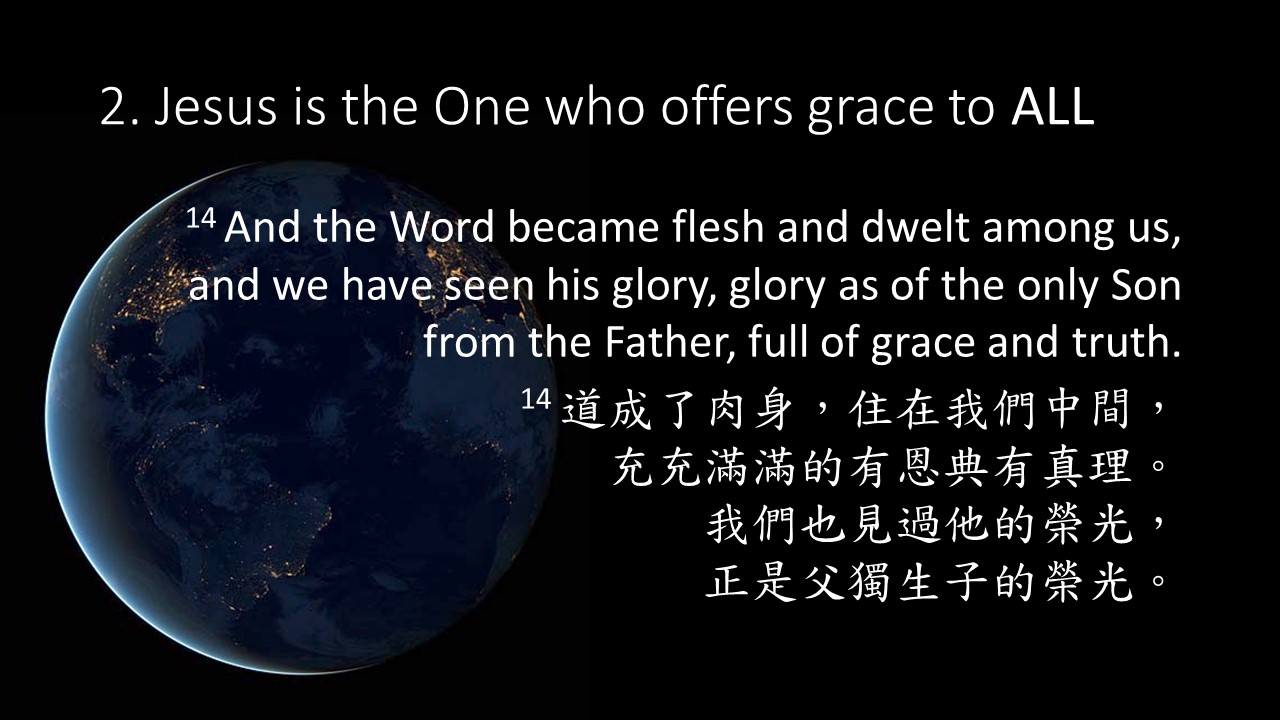
Verse 14, "And the Word became flesh and dwelt among us, and we have seen his glory, glory as of the only Son from the Father, full of grace and truth."

God’s Word, his Self-expression, has become flesh and dwelt among us. This is the supreme revelation. If we are to know God, this is the way. The author of Hebrews said, "In the past God spoke to our forefathers through the prophets at many times and in various ways, but in these last days he has spoken to us by his Son" (Heb. 1:1–2).

Jesus, God’s very Self-expression, who was both with God and who was God, became a man. What Jesus has shown us is God's glory in all the earth--God's global glory, the 3G.

2. God's global glory is the theme for the upcoming Chinese Mission Convention in about 8 days.

God's glory is his nature and his attributes. John uses the phrase, "full of grace and truth," to describe God's global glory. Full of "grace and truth" in John's Gospel alludes to the OT phrase "loving-kindness (hesed 慈愛) and truth (emet 誠實) (Exod. 34:6; cf. 33:18-19).

God's grace is His love for the world. His truth is His truthfulness and faithfulness. He never lies, He is going to do what He said He would do. This faithfulness found the ultimate expression in God's sending of his one and only Son.

Verse 16, "16 And from his fullness we have all received, grace upon grace. 17 For the law was given through Moses; grace and truth came through Jesus Christ. 18 No one has ever seen God; the only God, who is at the Father's side, he has made him known."


4. This is what the Christmas story has shown all of us. God's global glory in full display of His love and truthfulness manifested in the birth of Christ. When you see the baby Jesus in the Christmas story, you have seen God's love to you and God's faithfulness to you and your kin.

5. Today we live in a divided and subjective world. I say one, you say two, and he says three... You are Hindu, I am Christian, and he is a Muslin. It is all the same. Religion becomes a personal preference. Just last month, a 3-4 year old Muslim minority group child would say to us, "I am a Muslim. Don't talk to me about the Bible and your religion." Sharing our faith is harder and harder.

In the world out there, the Muslim is fighting the enemies of Islam in Jihad. And we fight the terrorists who threaten our peace and security. The Shiites is fighting the Sunnis. The pro-life and the pro-choice are at war. The world is deeply divided. People can hardly talk to each other with any common grounds.

The Christmas story is still the same. It is the full display of God's loyal love and faithfulness for everyone.

6. For a global merry Christmas,
  • Let the weak and wounded sinners, come to Jesus. Come to Jesus and live.
  • Let those who are heavy burdened, come to Jesus. Sing to Jesus and live.
  • Let those who fall and fail, fall on Jesus and walk again.
  • Let those who are lonely and filled with pain, if your sky is dark and the rain is pouring, cry to Jesus. Cry to Jesus and live.
  • When the love spills over, when music fills the night, and when you can't contain your joy inside, then dance for Jesus. Dance for Jesus and live! 
  • When death arrives with your final heartbeat, fly to Jesus. Fly to Jesus and live! 
(Chris Rice, Come To Jesus)

God is loving and faithful. He is here for you. Jesus is the One offers grace to everyone.

7. Let me pause for a moment and speak to you personally. Besides the fear we have, there maybe hatred and anger in our heart. Since 9/11 to Bin Laden's death, we spent over 1.3 trillion dollar in war on terror. During this time period, we have launched two wars in the Middle East. Over half a million people died. Violence begets violence. Maybe your fear has turned into hatred. Maybe your view of the world has turned bitter. Jesus was born also in a violent world. Rome had been ruthless. Caesar Augustus forced everyone to register in their own town--a massive forced displacement. Yet the birth of Christ is about love and faithfulness. He came to offer grace to everyone. Therefore pause for a moment and say a prayer to God. "Lord, fill my heart with love. Replace fear with hope. Replace hatred with love. Give me peace. Offer me grace."


Conclusion
We are the witness, John 6-8, 15, 19ff.


1. Verse 6-8 "6 There was a man sent from God, whose name was John. 7 He came as a witness, to bear witness about the light, that all might believe through him. 8 He was not the light, but came to bear witness about the light."


2. Who is this John dude in the middle of the flow of the most important chapter in the Gospel of John? He appears in verse 6-8 and again in verse 15. He is woven throughout this incredible, global story of Jesus's light and grace. John the Baptist is the witness to the light. John is the witness to the global Christmas story that Jesus is the Light on everyone and Jesus offers grace to all people. He is like us. He is like you and me. This is how God has chosen to get this message of light that is available to everyone out. John is called by God to share that message, to proclaim it, to get it out.

So are you and I. We are called to be the witness. We are the key to the global Christmas story. And for the world to have a global merry Christmas, you and I are the key.

3. Here is what you are going to do in response to the message this morning.

1) Fear not yourself in this crazy world. The Prince of Peace is here. He holds the key. If the world is going to have peace, let it begin with you.

2) Let me encourage you to pray this prayer during this Christmas season. "Lord, send me. Send me. I am not the light, but I want to bear witness to the light. Lord, send me." You may have no clue what that's going to mean; no clue where he is going to lead you; no clue who you are going to talk to. But start praying, "Lord, send me today. Send me to somebody today. Send me some place this week where I can love somebody in the name of Christ, where I can pray for somebody that is far from God." Pray the same prayer for the church. "Send us. Make us a truly global church." Let there be peace on earth and let it begin with us.


Let There be Peace on Earth and Let it begin with me.

Let there be peace on earth
And let it begin with me.
Let there be peace on earth
The peace that was meant to be.
With God as our Father
Brothers all are we.
Let me walk with my brother
In perfect harmony.

Let peace begin with me,
Let this be the moment now.
With ev'ry step I take
Let this be my solemn vow;
To take each moment and live
Each moment in peace eternally.
Let there be peace on earth
And let it begin with me.